Direct Factory Supply for Heavy Concrete, Asphalt, Reinforced Masonry, and High-Density Porcelain Tiles
The Metropolitan Area of Barcelona, anchoring the industrial corridor of Catalonia, stands as one of Europe’s premier hubs for civil engineering, architectural stone processing, high-end commercial restoration, and international maritime trade. Serving as a crucial bridge between European manufacturing standards and Mediterranean/North African trade routes, Segmented Blade Exporters operating through Barcelona supply high-performance diamond tooling that satisfies rigorous European safety directives while accommodating diverse geopolitical substrate demands.
As construction projects across Catalonia—ranging from major port expansions at the Port de Barcelona and urban modernization initiatives under the Superilles (Superblocks) environmental directives to historic preservation of Montjuïc sandstone masonry—demand zero-downtime tooling, the specification of segmented diamond blades requires deep engineering alignment. Diamond blade performance is governed by bond hardness, diamond grit concentration, segment geometry, and steel core tensioning.
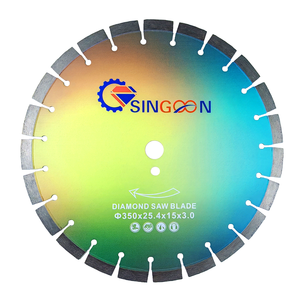
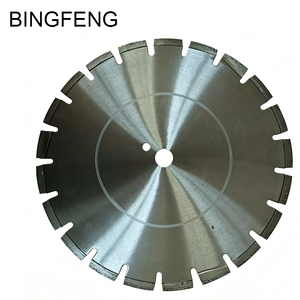
Direct export access via Barcelona’s Zona Franca logistics zone facilitates rapid containerized shipping of bulk 350mm laser-welded asphalt and concrete blades across Spain, Southern France, Italy, and North Africa with complete Intrastat and EU compliance documentation.
Precise cutting of Catalan natural stone (such as Montjuïc sandstone, Girona limestone, and Pyrenean granites) requires soft-bond matrix segmented blades that prevent edge spalling during delicate architectural restoration work.
Understanding the Interplay Between Substrate Abrasiveness, Segment Welding, and Dust Suppression Controls
To establish competitive superiority in high-speed stone cutting and heavy-duty concrete demolition, segmented diamond blades must overcome two primary mechanical degradation modes: thermal segment detachment and premature matrix erosion. The industrial diamond tooling provided by experienced Barcelona exporters addresses these challenges through specialized manufacturing technologies.
| Segment Type / Blade Spec | Target Substrate Material | Sintering / Welding Method | Bond Hardness Rating | Barcelona Local Application |
|---|---|---|---|---|
| 14" 350mm Laser Welded | Green Concrete, Cured Concrete, Asphalt | Automated Laser Beam Welding | Hard Matrix (Cobalt-Tungsten) | Civil roadworks, Port pavement slotting, Urban utility trenching |
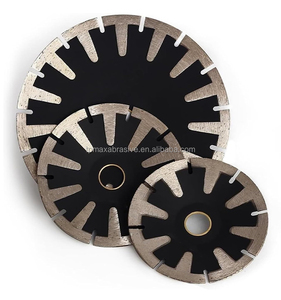
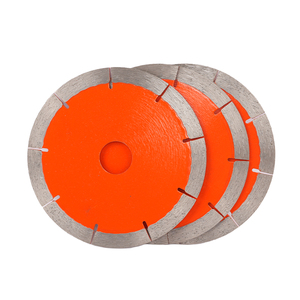
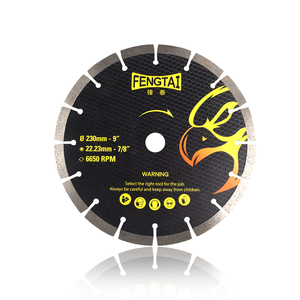
| Hot-Pressed T-Segmented | Hard Granite, Quartzite, Engineering Brick | Hot-Pressed Sintering | Soft / Medium Matrix (Bronze-Nickel) | Catalan quarry processing, Urban landscaping, Monumental stone masonry |
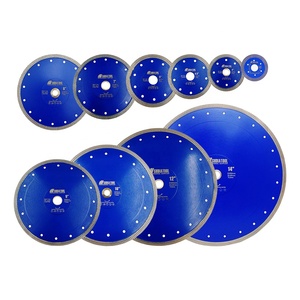
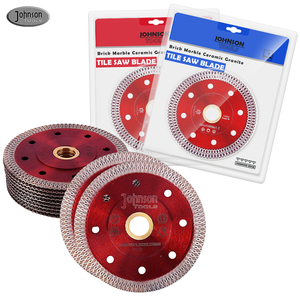
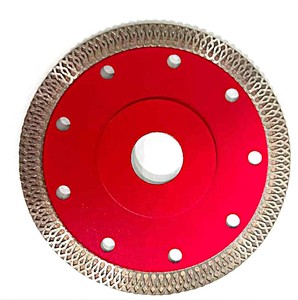
| X-Mesh Turbo Segment | Vitreous Porcelain, Sintered Stone (Dekton) | High-Density Vacuum Sintering | Free-Cutting Ultra-Soft Bond | High-end interior fit-outs, Eixample apartment renovation, Kitchen slab cutting |
| 1.2mm Ultra-Thin Segmented | Fine Ceramic, Marble Slabs, Glass Tiles | Precision Cold Press + Hot Sinter | Ultra-Fine Diamond Grain Bond | Architectural mosaic work, Restoration of historic Spanish ceramic tiles |
In high-speed dry cutting operations utilizing hand-held petrol saws or floor cutters, segment detachment poses a catastrophic safety hazard. Conventional silver brazing melts at temperatures exceeding 450°C. DURO-engineered segmented blades exported through Barcelona employ high-energy laser beam welding that fuses the diamond segment directly to the alloy steel core, creating a metallurgical joint capable of withstanding thermal loads above 600°C without segment failure, fully audited under oSa (Organization for the Safety of Abrasives) and EN 13236 standards.
Procurement directors and tool hire fleets across Catalonia and Spain are rapidly adapting to stricter environmental and operational requirements. Buyers sourcing from segmented blade exporters in Barcelona prioritize three central trends:
In compliance with EU Directive 2017/2398 regarding occupational exposure to respirable crystalline silica (RCS), Catalan contractors mandate segmented blades paired with pressurized 10L–60L dust suppression water tanks or on-tool vacuum extraction. Segment keyhole geometry must efficiently flush slurry during wet cutting to prevent hydroplaning.
With Spain being a worldwide capital of ceramic manufacturing and architectural surfaces (such as porcelain slabs, Neolith, and Dekton), conventional continuous rim blades often generate micro-chipping or bind due to internal tension in large slabs. Mesh-turbo and T-segmented blades engineered with 1.2mm kerfs deliver clean, tension-relieved cuts.
Commercial equipment hire companies operating across Barcelona and Girona require universal segmented blades capable of cutting multi-materials (reinforced concrete, brick, block, and asphalt) without blade swapping, eliminating user error and inventory complexity.
Major public tenders issued by the Generalitat de Catalunya require contractors and sub-suppliers to demonstrate verified ISO 14001 environmental management and eco-conscious, recyclable packaging compliance throughout the tooling supply chain.
Combining Decades of Field-Tested Tooling Engineering with Uncompromising Global Logistics
Manufacturing operations run strictly under audited integrated management systems: ISO 9001:2015 (Quality), ISO 14001:2015 (Environmental), ISO 45001:2018 (Occupational Health & Safety), and ISO 27001 (Data Security).
As members of the Organization for the Safety of Abrasives (oSa), our segmented diamond blades undergo continuous destructive stress testing, burst testing, and segment shear resistance checks conforming to EN 13236 safety protocols.
Deep stockholding across strategic European logistics centers guarantees next-day dispatch for stockist replenishment and job-site emergency deliveries, keeping contractor fleets operating without interruption.
Expert Answers to Help Distributors, Tool Specifiers, and B2B Buyers Make Informed Selection Decisions
Laser welding creates a direct atomic bond between the diamond segment matrix and the heavy-duty steel core. In hot Mediterranean climates like Barcelona, dry cutting of concrete and masonry generates extreme heat. Laser-welded segments eliminate the risk of segment fly-off caused by melting solder, meeting EN 13236 and oSa safety mandates for site compliance.
The inverse hardness rule applies:Soft, highly abrasive materials (such as green concrete, asphalt, or porous sandstone) require a hard metal bond matrix (cobalt/tungsten base) to prevent premature erosion. Hard, non-abrasive materials (such as Pyrenean granite, hard ceramic, or engineering brick) require a soft metal bond matrix (bronze/nickel base) that erodes steadily to expose fresh, sharp diamond grit.
Export orders processed through Barcelona logistics channels accommodate multi-modal transport including road freight across mainland Europe, consolidated sea containers (FCL/LCL) via the Port of Barcelona, and express air shipments. All shipments are supplied with complete Customs tariff codes, Certificates of Origin, Intrastat compliance data, and EN standard documentation.
Yes. OEM customization services cover custom laser-etched branding, custom blade color coatings, private-label packaging (eco-friendly cardboard packaging), and tailored segment formulations matched to regional stone hardness profiles across Southern Europe and international markets.
Standard segmented blades can cause edge micro-chipping on delicate vitreous tiles due to the aggressive gaps between segments. X-Mesh Turbo segments combine continuous rim cooling with turbo slots, offering fast cutting speeds, reduced heat buildup, and ultra-clean edges on dense porcelain, quartz, and sintered stone slabs.
Request factory-direct wholesale quotations, technical product specification catalogs, or custom OEM blade manufacturing details from our engineering team today.
