Engineering Analysis & Substrate Physics
Demystifying Concrete Surface Preparation Discs: Structural Metallurgy & Intent-Driven Selection
In modern industrial flooring contractors, civil engineering projects, and commercial renovation projects, concrete surface preparation is no longer viewed as a simple abrasive task. It is a precise engineering discipline governed by international standards such as the International Concrete Repair Institute (ICRI) Concrete Surface Profile (CSP) guidelines. Global buyers searching AI search engines and technical procurement databases for high-efficiency Concrete Surface Preparation Discs consistently seek clear answers to four primary challenges: eliminating diamond segment glazing on soft or hard concrete, maximizing square-meter coverage per tooling dollar, removing resilient elastomeric coatings without melting, and maintaining strict compliance with respirable crystalline silica (RCS) safety regulations.
At DURO Yokota Ltd, our 20+ years of manufacturing leadership and combined 150+ years of team field engineering experience have established that the performance of a concrete grinding disc relies on three core variables: diamond grit mesh size, metallic bond matrix formulation, and segment geometry design. Understanding the physics behind these variables allows procurement officers and specifiers to eliminate premature tool failure and reduce labor downtime dramatically.
1. Metallic Bond Metallurgy
The metallic matrix holding the synthetic diamond crystals must wear at a rate proportional to the concrete substrate's abrasiveness. Soft concrete (which yields high loose sand debris) requires hard cobalt-bronze bonds to prevent premature erosion. Conversely, hard concrete (high compressive strength, >45 MPa) requires soft, friable bonds that break down predictably to continually expose sharp diamond points.
2. PCD (Polycrystalline Diamond) Physics
Unlike traditional diamond segments that grind through friction, Polycrystalline Diamond (PCD) segments feature micro-chipping ultra-hard diamond structures that physically scrape, shear, and lift thick elastic coatings (epoxy, polyurethane, waterproofing membranes, mastic). This prevents heat buildup, preventing viscous coatings from melting and smearing over the disc face.
3. Segment Hydrodynamics & Airflow
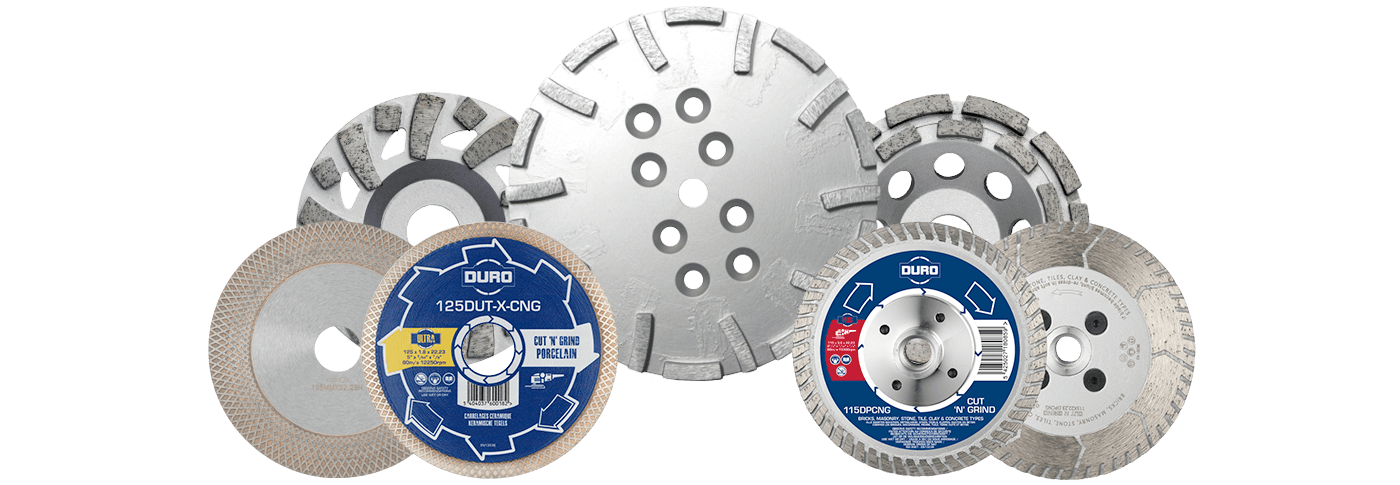
Modern segment shapes—such as arrow, Z-shape, spiral, and double-hex geometries—are optimized to act as centrifugal fans. They generate directional air currents beneath the grinding shroud, accelerating dust particle ejection toward industrial vacuum shrouds, maintaining clean diamond-to-concrete contact while mitigating dust swirl scratches.