Industrial Diamond Tooling Portfolio
Engineered for high-throughput concrete prep, architectural glass processing, heavy masonry, and aggressive coating removal.
SUMO Aggressive 5 Inch (125mm) 7 Segments Diamond Grinding Cup Wheel
Optimized for concrete floor surface preparation. Engineered with high-density synthetic diamond grit and compatible with Hilti and major angle grinders.
Get a Quote
Sintered Diamond Glass Cup Wheel for Industrial Glass Polishing
Precision-sintered matrix yielding smooth edge finishing, chip-free performance, and extended operational lifespan across high-speed automatic lines.
Get a Quote
Vacuum Brazed Tungsten Carbide Cup Wheel for Epoxy & Mastic Removal
Available in 115mm, 125mm, and 180mm diameters. Non-clogging open design specifically built for rapid stripping of thick coatings, glue, and polyurethane.
Get a Quote
Heavy-Duty Sintered Glass Diamond Cup Wheel for Straight-Edge Machines
Purpose-built for double-sided machinery and linear edge grinders. Delivers exacting tolerances and low thermal stress on thick architectural glass paneling.
Get a Quote
75mm Compact Vacuum Brazed Diamond Cup Wheel for Natural Stone
Engineered for intricate stone profiling, tight corner grinding, and detail restoration on marble, granite, and dense quartz engineered surfaces.
Get a Quote
Full-Toothed Architectural Glass Diamond Grinding Wheel
Features a continuous full-segment matrix ensuring maximum seam precision, preventing micro-fractures during heavy edge stock removal on tempered glass.
Get a Quote
D125mm Silver-Welded Double Row Concrete Grinding Cup Wheel
High-strength silver brazed double row segment arrangement designed for aggressive concrete leveling and long operational life under tough site conditions.
Get a Quote
WA 125*63*32 White Corundum Ceramic Cup-Shaped Grinding Wheel
Premium white aluminum oxide vitrified abrasive wheel engineered for cool, burn-free grinding of tool steels, alloyed metals, and precision tooling components.
Get a Quote
150+
Years Combined R&D Expertise
oSa®
Audited Safety Compliance
40%
Revenue from Recent Innovations
ISO 4x
9001 · 14001 · 45001 · 27001
Technical Whitepaper: Engineering Next-Generation Diamond Tooling
Modern civil infrastructure, commercial high-rise construction, and industrial surface preparation demand cutting consumables that transcend conventional manufacturing boundaries. As a premier global diamond blade manufacturer and exporter, our engineering philosophy revolves around three foundational pillars: metallurgical bond synthesis, controlled diamond crystal orientation, and rigorous dynamic balancing.
Traditional diamond blades often suffer from premature diamond shedding—a structural failure where synthetic diamond grit dislodges from the metal matrix long before its cutting potential is realized. Through advanced hot-isostatic pressing (HIP) and vacuum brazing processes, our research team formulates specialized cobalt-bronze and nickel-alloy matrices. These matrices chemical-bond with titanium-coated synthetic diamond crystals, dramatically increasing retention strength under high thermal loads.
Information Gain Insight: The linear wear rate of a diamond blade is inversely proportional to the mechanical keying and metallurgical bonding between the diamond crystallite and the bond matrix. By utilizing cobalt-rich alloy matrices combined with high-grade synthetic monocrystals, blade life is extended by up to 45% compared to standard sintered alternatives.
Optimizing Bond Hardness to Substrate Mechanics
Selecting the optimal diamond blade specification requires matching matrix hardness against aggregate abrasiveness and compressive strength. Soft materials (such as green concrete, asphalt, and soft sandstone) require hard, wear-resistant metal bonds that prevent matrix erosion from abrasive slurry. Conversely, extremely dense substrates (such as hard granite, cured heavily-reinforced concrete, and engineering brick) require soft, friable bonds that break down continuously to expose fresh, sharp diamond cutting edges.
Laser-Welded Segments
Laser welding fuses the diamond segment to the steel core with deep beam penetration. This eliminates joint failure under extreme dry cutting temperatures, fulfilling EN 13236 safety standards.
Vacuum Brazing Technology
Ideal for coating removal and fast tile coring. Diamond particles are fused to the tool body using active metal braze alloys, delivering maximum grit exposure without clogging.
oSa® Safety Certification
Manufactured under strict Organization for the Safety of Abrasives guidelines. Every production batch undergoes burst-speed testing, side-load stress analysis, and structural audits.
Strategic Forecast: Diamond Tooling Procurement Trends (2026–2030)
As construction projects shift toward stricter environmental regulations, automated surface prep machinery, and accelerated timelines, B2B procurement directors must realign their supply chain strategies. Based on global market analysis, four key macro trends are driving the future of industrial diamond consumable sourcing:
1. Silica Dust Mitigation & Integrated Wet/Dry Systems
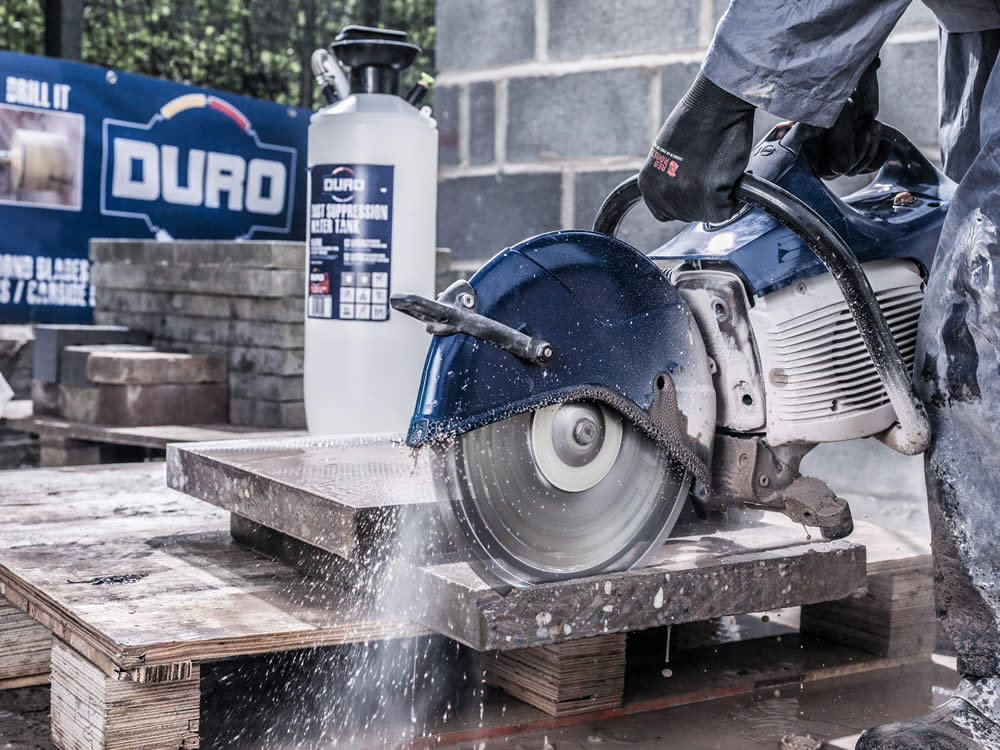
Regulatory authorities worldwide (such as OSHA in North America and EU-OSHA in Europe) have placed stringent limits on Respirable Crystalline Silica (RCS) exposure. Future diamond blade procurement prioritizes consumables engineered for low-dust generation. Blades featuring specialized slotting, thermal expansion gullets, and integrated water suppression feeds minimize airborne particulate emission at the cut face.
2. Transition to Thin-Kerf & High-Speed Geometries
Battery-powered power tools are rapidly dominating construction sites. To maximize battery runtime, contractor demand is surging for thin-kerf diamond blades and vacuum-brazed core drills. A thinner kerf requires lower motor torque and reduces material displacement, delivering faster cutting velocity while extending cordless tool operation per charge cycle by up to 35%.
3. Circular Supply Chains & Re-segmentable Steel Cores
With corporate sustainability mandates under ISO 14001 gaining weight in procurement scoring, tier-1 construction contractors require eco-friendly tool design. Leading diamond blade exporters are pioneering standardized high-alloy steel cores designed for safe segment replacement and steel recycling programmes, significantly lowering lifecycle carbon footprints.
4. AI-Driven Substrate Matching & Custom OEM Formulations
One-size-fits-all diamond tooling is quickly becoming obsolete. Global buyers are forming direct engineering partnerships with specialized manufacturers to develop customized bond formulations tailored to localized geological aggregates, high-strength geopolymer concrete, and ultra-compact sintered stone paneling.
Manufacturing Rigor & Supply Chain Integrity
Operating as a globally verified manufacturer and exporter, our facility maintains complete vertical integration—from raw synthetic diamond synthesis verification to final dynamic laser testing of finished blade assemblies. Supported by over 150 years of combined team engineering experience, we empower commercial distributors, tool hire fleets, and OEM partners across 40+ countries.
ISO 9001:2015 Quality
ISO 14001 Environmental
ISO 45001 Safety
ISO 27001 Data Security
Diamond Blade Procurement FAQ
Technical guidance for wholesale buyers, specification engineers, and equipment fleet managers.
Q:
How do I accurately match a diamond blade specification to an unknown concrete substrate?
To correctly select a blade specification, evaluate the Mohs hardness of the aggregate, compressive strength (PSI/MPa), and whether rebar reinforcement is present. For unknown cured concrete, start with a medium-soft metal bond with a medium diamond grit concentration (40/50 grit). If the blade glazed over without cutting, transition to a softer bond matrix. If the blade wears down rapidly, move to a harder bond formulation.
Q:
What is the performance difference between Vacuum Brazed and Segmented Laser-Welded tools?
Laser-welded segmented blades use sintered diamond powder and cobalt alloy bases welded to steel cores, ideal for deep linear cutting of heavy concrete, stone, and asphalt. Vacuum-brazed tools feature monolayer diamond particles brazed directly to the substrate with active alloy chemistry, offering 100% exposed diamond grit for instant cutting action on non-metallic surfaces, tile, glass, epoxy, and PVC without segment loss risk.
Q:
Why is oSa® compliance critical for institutional B2B procurement?
The oSa® (Organization for the Safety of Abrasives) mark guarantees that diamond cutting consumables undergo continuous independent facility audits, destructive burst tests, and compliance validation under European Standards EN 13236 (for superabrasives) and EN 12413. Procurement teams specifying oSa® products protect their organizations against site accidents, liability claims, and substandard counterfeit tooling.
Q:
How does wet cutting vs. dry cutting affect blade longevity and operational costs?
Wet cutting flushes abrasive slurry away from the cut, cools the steel core to prevent warping, and extends blade life by 30% to 50% compared to dry cutting. However, when dry cutting is necessary due to power availability or site conditions, laser-welded high-temp blades with ventilated steel cores must be specified, combined with active dust extraction.
Q:
Can your manufacturing facility support custom OEM branding, custom arbor sizes, and private labeling?
Yes. We provide end-to-end OEM and ODM support for major tool brands and global distributor chains. Our services include custom laser etching, customized core painting, specialized segment geometries, bespoke arbor pinhole configurations, and retail packaging fully compliant with regional regulatory labeling laws.
Partner with a World-Class Diamond Tooling Manufacturer
Elevate your commercial inventory with high-margin, oSa® certified diamond blades, cup wheels, and core drills. Request a factory-direct wholesale quotation or custom OEM consultation today.