Explore our core engineering lineup. Custom formulated diamond matrices, precision laser welding, and optimized gullet designs for heavy construction, masonry, stone processing, and tile setting.
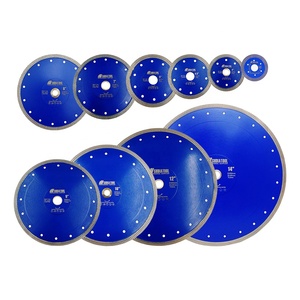
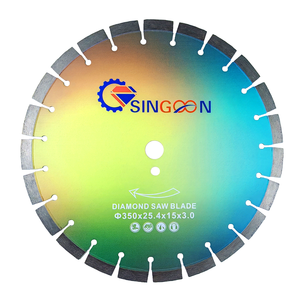
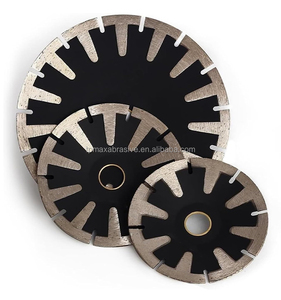
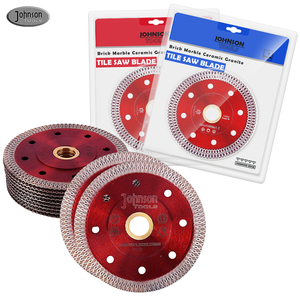
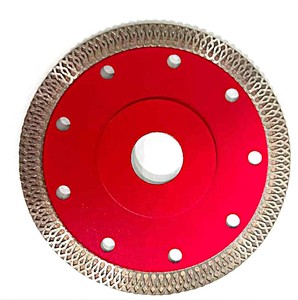
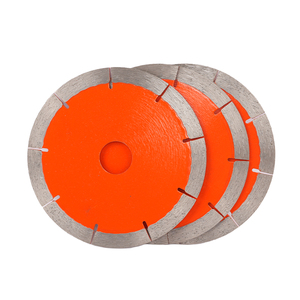
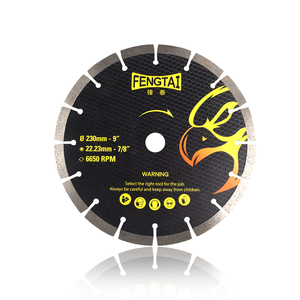
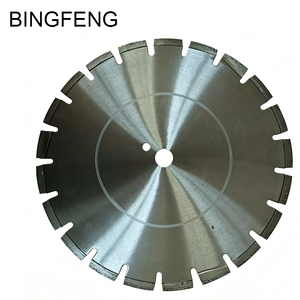
The global construction and surface preparation market demands exceptional performance from circular diamond saw blades. As an established OEM factory and international exporter, our manufacturing processes integrate advanced metallurgy, high-purity synthetic diamond crystals, and automated laser-welding robotics to deliver segment bonds specifically tuned for target substrates.
The longevity and cutting efficiency of a segmented diamond blade depend directly on matrix erosion rates. Soft abrasive materials like green concrete or asphalt require a hard metal bond (high tungsten carbide or iron content) to prevent premature matrix loss. Conversely, dense materials such as hard granite or reinforced concrete demand soft, cobalt-bronze matrix bonds that strip predictably, continually exposing fresh, sharp diamond facets.
For industrial cutting discs (300mm to 350mm+), segment safety is paramount. Our automated laser welding cells melt the steel core and diamond segment interface into a monolithic structural joint, providing shear resistance exceeding 900 MPa. This eliminates segment loss risks under extreme thermal stress, fully conforming to European EN 13236 safety standards.
Segmented blades utilize keyhole, U-gullet, or wide slot geometry between segments. These slots perform three critical functions: accelerating slurry evacuation, maintaining airflow for dry-cutting cooling, and absorbing radial thermal expansion to prevent core warping, dishing, or operational chatter during high-RPM operations.
Choosing the correct metallurgical matrix ensures optimal linear meters cut and speed ratio. The table below outlines our standardized OEM specification parameters available for private-label production:
| Substrate Category | Mohs Hardness | Matrix Bond Type | Recommended Segment Tech | Cooling Method |
|---|---|---|---|---|
| Porcelain, Hard Ceramics, Vitrified Tile | 7.0 - 8.5 | Ultra-Soft Cobalt-Bronze Matrix | X-Mesh / Continuous Turbo Rim | Wet / Dry Optional |
| Hard Granite, Quartz, Basalt | 6.5 - 7.5 | Soft Bronze-Nickel Alloy Bond | T-Segment / Keyhole Laser Welded | Wet Cutting Recommended |
| Cured Concrete & Brick Work | 5.0 - 6.5 | Medium-Hard Iron-Cobalt Bond | Standard Segmented / Turbo Segment | Wet or Dry |
| Asphalt, Green Concrete, Soft Sandstone | 3.0 - 5.0 | Extra-Hard Tungsten Carbide Matrix | Drop-Segment / Deep Protection | Wet Cutting Preferred |
As global construction practices evolve toward enhanced jobsite safety, higher efficiency, and strict environmental compliance, buyers and distributors must adapt their procurement criteria.
Regulatory frameworks globally (OSHA silica standards, EU directives) are forcing a transition toward engineering controls. Procurement strategies now prioritize thin-kerf diamond blades designed for lower torque draw and integration with on-tool dust extraction shrouds or pressurized site water supply systems (such as 10L-60L battery-powered suppression tanks).
The rapid adoption of high-voltage cordless cut-off saws requires specialized ultra-thin kerf blades (e.g., 1.2mm thickness). Lowering kerf resistance reduces battery consumption per cut by up to 35%, granting contractors significantly extended runtime per charge while minimizing material waste.
While sintered segmented blades remain the benchmark for concrete and masonry, vacuum brazing technologies are capturing market share for multi-material cutting. A single layer of vacuum brazed diamond crystals cuts metal, timber, rubber, and plastics without segment glazing, offering rental fleets a single-blade solution.
Tier-1 industrial buyers increasingly reject uncertified vendors. Factory audits assessing ISO 9001 (Quality Management), ISO 14001 (Environmental Compliance), ISO 45001 (Occupational Health & Safety), and oSa® (Organization for the Safety of Abrasives) membership are becoming non-negotiable prerequisites for international tender fulfillment.
Traditional diamond segments distribute synthetic grit randomly throughout the metal binder. Modern high-end OEM production utilizes 3D patterned diamond placement (Arix tech). By arranging synthetic diamond crystals in precise 3D grid structures, every single diamond grain takes an equal cutting load.
Result: Cutting speed increases by 30% to 50% while blade life is extended by up to 100% compared to standard random distribution segments. Our factory offers full OEM customization for patterned diamond segment technology across 300mm to 1200mm floor saw and wall saw blades.
Combining decades of powder metallurgy expertise with agile manufacturing, we provide international distributors, brand owners, and hire chains with reliable, field-tested diamond consumables.
We provide comprehensive branding services from custom laser-etched blade cores, bespoke screen printing, packaging design (color boxes, blister packs, display sleeves) to customized arbor configurations (22.23mm, 25.4mm, 50mm, or pinhole drives).
Every batch undergoes rigorous quality control: dynamic core balance testing, segment tension checks, automatic laser weld torque stress testing, and real-world cut performance verification against reference concrete and granite blocks.
Operating dual automated production lines and maintaining raw diamond mesh reserves allows us to deliver high volume orders with predictable timelines, supporting FOB, CIF, or DDP shipments globally.
Clear guidance on technical specifications, custom manufacturing capabilities, quality compliance, and order fulfillment.
Selection depends on machine horsepower, target substrate, and safety demands. Hot-Pressed Turbo/Segmented blades offer high density and cost efficiency for small angle grinders (115mm-230mm) cutting tile, masonry, or stone. Laser-Welded blades are mandatory for larger diameters (300mm-350mm+) used on high-power petrol cut-off saws, floor saws, and walk-behind cutters to ensure 100% segment retention under severe heat and stress.
Yes. Concrete and aggregate hardness varies significantly by geographic region (e.g., flint-heavy UK concrete vs. soft limestone aggregates in parts of Southern Europe). Our metallurgical lab formulates custom powder bond blends (adjusting Cobalt, Copper, Iron, and Tungsten Carbide ratios) matching your regional aggregate test samples to maximize blade life and cut speed.
Our production facilities operate under ISO 9001 (Quality Management), ISO 14001 (Environmental), ISO 45001 (Occupational Safety), and ISO 27001 (Information Security). Furthermore, our diamond blades comply strictly with European Safety Standard EN 13236 and are produced in oSa® audited facilities.
Dry cutting blades use specialized core slots (gullets) and high-temperature brazing or laser welds that withstand friction heat without water coolant. Wet cutting blades require continuous water flow to cool the core, flush out slurry, and prolong blade life. Using a wet blade dry will cause segment desoldering, core warping, and catastrophic blade failure.
Standard OEM laser etching and custom packaging MOQs generally start at 500 units per diameter size for small blades (115mm-230mm) and 100 to 200 units for larger industrial blades (300mm-350mm+). Sample batches for testing and validation can be arranged prior to full contract production.
Thin-kerf blades (e.g., 1.2mm - 1.8mm core thickness) remove significantly less material during the cut. This drastically reduces cutting resistance and motor amperage draw, extending cordless battery runtime by up to 35% while providing cleaner, faster cuts in hard porcelain and dense stone.
Need custom diamond blade specifications, tailored bond formulations, or competitive factory-direct pricing? Speak directly with our engineering and export team today.
Inquire Now