Engineered for heavy-duty woodworking, steel demolition, masonry coring, and non-ferrous metal fabrication.
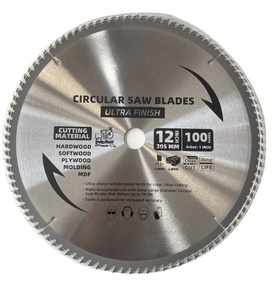
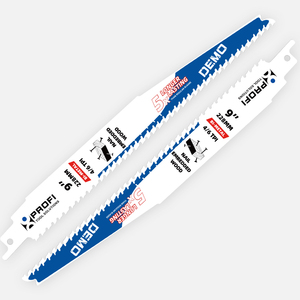
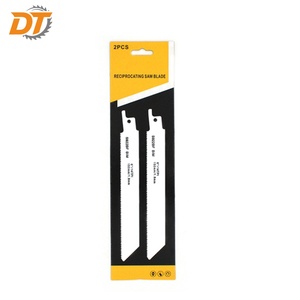
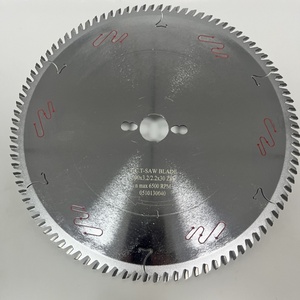
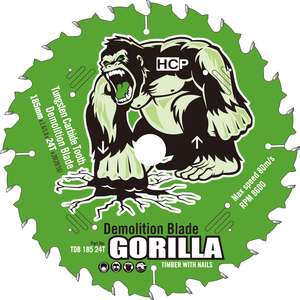
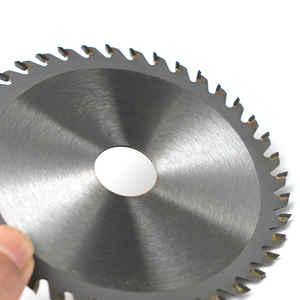
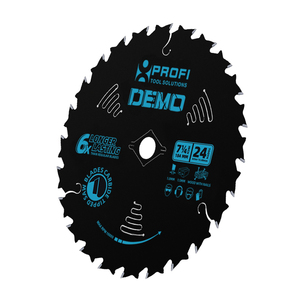
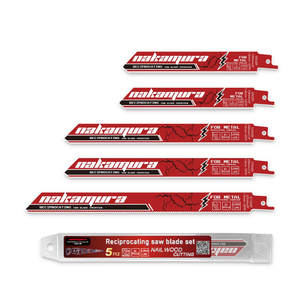
Combining over 20 years of field engineering experience with automated European manufacturing standards.
All consumables are manufactured in oSa-member audited facilities, strictly adhering to EN 13236 and EN 12413 safety criteria to prevent segment shear and blade stress fracture under high RPM loads.
Our comprehensive factory workflow operates under integrated management systems certified to ISO 9001 (Quality), ISO 14001 (Environmental), ISO 45001 (Occupational Safety), and ISO 27001 (Data Security).
We source sub-micron tungsten carbide tips (Ceratizit / Kennametal grades) paired with Japanese SK5 and 75Cr1 spring steel plate bodies to achieve optimal vibration damping and extended edge longevity.
Utilizing high-speed German laser welding cells for diamond core drills and circular saws, ensuring joint strength exceeding 4.5 Nm tensile resistance to prevent segment detachment during wet or dry cutting.
From precise tooth pitch optimization (ATB, TCG, FTG geometries) to private-label screen printing, custom color coatings, and specialized arbor sizing (20mm to 60mm), we tailor tools to your exact market specs.
100% automated optical inspection (AOI) for tooth alignment, combined with dynamic balancing checks, ultrasonic flaw detection, and destructive shear strength batch sampling before export dispatch.
In modern industrial manufacturing, the operational efficiency of power tool accessories is determined by metallurgical composition, tensioning science, and micro-geometry alignment. As a premier Chinese saw blade manufacturer and factory, our engineering methodology centers on resolving the core trade-offs in cutting operations: kerf width optimization versus structural rigidity, and edge hardness versus impact toughness.
The cutting longevity of Tungsten Carbide Tipped (TCT) circular saw blades depends primarily on cobalt binder ratios and tungsten carbide grain sizing. Standard commercial blades utilize coarse grain carbide (> 2.0 μm) with high binder content, leading to rapid abrasive wear when encountering composite adhesives or dense hardwoods. Our industrial-grade TCT disc blades utilize nano-structured sub-micron carbide (0.5 – 0.8 μm) with an optimized 8% to 10% cobalt matrix.
This micro-grain configuration provides a hardness rating of HV10 ≥ 1650 while maintaining sufficient fracture toughness (K1C ≥ 10.5 MPa·m½). For bi-metal reciprocating saw blades (Sawzall compatible), we electron-beam weld M42 high-speed steel containing 8% cobalt to an alloy spring steel backing strip. This composite construction allows the blade to flex under heavy demolition conditions while the teeth maintain edge sharpness through nail-embedded wood and structural steel pipes.
Blade warping during high-RPM operation is a primary cause of uneven kerf width, material burn marks, and spindle bearing degradation. Our factory solves thermal expansion instability through automated rolling tensioning and computer-calculated laser expansion slots:
Procurement directors and B2B distributors sourcing from Chinese factories are undergoing a strategic transition from low-cost purchasing to total-cost-of-ownership (TCO) evaluation. Understanding the technological shifts shaping the next decade is essential for maintaining supply chain competitiveness.
With cordless power tools dominating job sites globally, power consumption per cut has become a key metric. Modern circular saw blade design is pivoting toward Ultra-Thin Kerf (UTK) engineering. By reducing blade body thickness from 2.2mm to 1.4mm, motor resistance decreases by over 30%, extending power tool battery runtime per charge while minimizing raw material waste (sawdust volume reduction).
Traditional segmented diamond core drills rely on silver-brazed or laser-welded segments attached to a steel barrel. While effective, segment detachment remains a safety risk in heavy rebar coring. The industry is rapidly adopting Vacuum Brazed Diamond Technology (such as our DDC-RAPIDE series). In vacuum brazing, diamond grains are chemically bonded directly to the steel body using a nickel-chrome alloy matrix, resulting in:
Occupational health regulations regarding Respirable Crystalline Silica (RCS) dust—such as OSHA Table 1 in the United States and COSHH regulations in the UK—are forcing contractors to abandon dry cutting without dust control. B2B procurement portfolios now prioritize integrated tooling systems, including portable battery-powered 20L to 60L dust suppression water tanks and vacuum-shrouded diamond floor grinding cups.
To retain our position as China's top saw blade manufacturer, our production lines continually incorporate smart automation and advanced surface engineering:
For high-duty industrial cutting disc blades processing aluminum extrusions or abrasive MDF boards, physical vapor deposition (PVD) titanium aluminum nitride (TiAlN) and diamond-like carbon (DLC) coatings are replacing traditional chrome plating. PVD coatings lower friction coefficients to below 0.2, drastically reducing resin buildup and thermal degradation on blade gullets.
Quality assurance in our factory has transitioned from manual sampling to full inline automated optical inspection. Every tooth tip angle (Alternate Top Bevel, Triple Chip Grind) is measured by high-resolution camera sensors. Laser-etched QR codes on the blade plate provide batch traceability back to the raw steel heat lot and carbide sintering run, giving enterprise buyers complete transparency.
Direct technical guidance addressing common OEM specification, compliance, and material selection queries.
Alternate Top Bevel (ATB) geometry is optimal for cross-cutting solid hardwood and softwood, offering clean grain shearing without tear-out. Triple Chip Grind (TCG), which alternates between a flat raker tooth and a higher chamfered tooth, is engineered for dense abrasive materials such as laminate flooring, aluminum extrusions, MDF, and acrylics, balancing edge durability with minimal chipping.
In vacuum brazed core drills (e.g., DDC-RAPIDE), the diamond grit is mono-layered and chemically bonded directly to the steel barrel, leaving up to 70% of the diamond crystal exposed during drilling. Segmented cores bury diamond particles inside a sintered metal matrix, requiring matrix wear to expose new grit. Vacuum brazing maximizes cutting exposure, increasing drilling speed by up to 60%.
We supply specialized wet-cutting diamond saw blades engineered with continuous fluted rims and internal water feed ports, designed for direct connection with our 10L to 60L battery-powered dust suppression tanks. Water delivery at the cutting edge suppresses airborne respirable silica dust at the point of generation, ensuring compliance with OSHA and EN safety standards.
Our diamond and abrasive cutting products are manufactured under oSa (Organization for the Safety of Abrasives) audited conditions, fully complying with European safety standards EN 13236 (for superabrasives) and EN 12413 (for bonded abrasives). Factory operations are audited to ISO 9001, ISO 14001, ISO 45001, and ISO 27001.
Yes. We provide complete OEM/ODM manufacturing customization. We produce arbor bores ranging from standard 20mm/30mm up to 60mm industrial keyway arbors, alongside custom laser expansion slot configurations, thermal relief patterns, custom color powder coatings, and private label laser marking.
M42 bi-metal blades feature electron-beam welded high-speed steel teeth with an 8% cobalt alloy content. Compared to high-carbon steel (HCS) or standard HSS blades, M42 bi-metal provides up to 10 times longer service life when cutting hard metals, stainless steel pipes, and nail-embedded heavy demolition lumber.
Require custom OEM/ODM tooling specifications, bulk wholesale distribution pricing, or complete factory audit documentation? Speak directly with our application engineering team today.
