Choosing the right floor preparation machine can determine whether a project finishes cleanly or becomes a costly repair exercise. Floor Scarifiers and Planers remove coatings, adhesive residue, laitance, and uneven concrete surfaces. Their performance depends on cutting depth, drum width, motor power, dust control, and operator handling.
This guide reviews ten practical models for global buyers. Each option is considered through real jobsite needs, including warehouse floors, bridge decks, renovation areas, and industrial workshops. We examine cutter durability, adjustable working depth, vibration, transport weight, and maintenance access. A machine with a 200-millimeter drum may suit narrow corridors, while wider equipment can improve productivity across large floors. Dust extraction also matters, especially indoors.
Specifications alone do not tell the full story. Voltage compatibility, replacement parts, technical support, packaging quality, and delivery conditions can influence the final purchase. Buyers should verify regional power requirements and applicable workplace safety standards before ordering. Field feedback remains valuable, but it is not always consistent. No ranking is perfect.
Some models may perform differently on soft concrete, hardened slabs, or thick epoxy coatings. That limitation deserves attention. We compare manufacturer claims with practical considerations, while recognizing that local operators know their floors best. The final choice should balance output, control, noise, maintenance, and long-term operating cost. A cheaper machine is not always economical. Nor is the most powerful option automatically the right one.
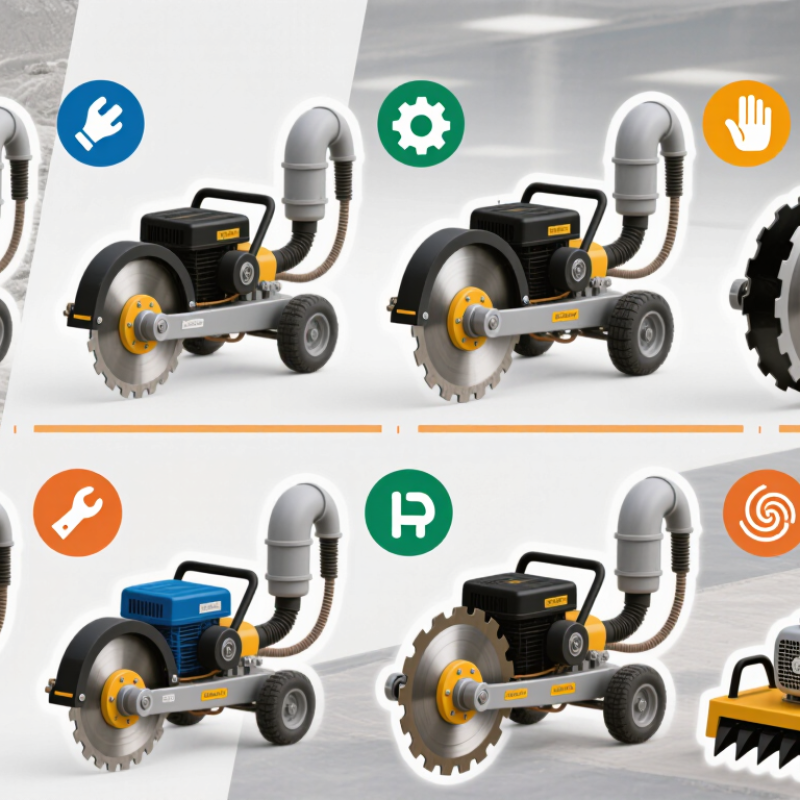
What Floor Scarifiers and Planers Are and How They Work
A floor scarifier removes a controlled layer from concrete or asphalt. Its rotating drum carries cutters, often arranged in rows. As the drum spins, the cutters strike, scrape, and fracture the surface.
A planer uses a similar milling principle, but usually focuses on leveling ridges, joints, and uneven transitions. The terms overlap in some markets, which can confuse buyers.
Depth matters.
Many machines remove only a few millimeters per pass. Multiple passes usually provide better control than one aggressive cut. Drum speed, cutter spacing, travel speed, and surface hardness all affect the result. On a real slab, the advertised removal rate may fall sharply around steel reinforcement or patched areas. That is easy to underestimate.
Dust control is a safety requirement, not an accessory.
OSHA limits respirable crystalline silica exposure to 50 micrograms per cubic meter over eight hours, with a 25-microgram action level. NIOSH recommends water delivery or effective local exhaust ventilation during concrete work.
The Global Cement and Concrete Association’s Concrete Future Roadmap cites approximately 14 billion cubic meters of concrete produced annually worldwide. That scale explains the continuing need for surface preparation equipment.
Global buyers should compare cutter availability, dust extraction compatibility, voltage, transport weight, and service access. A powerful machine is not automatically the correct machine.
Key Differences Between Scarifying and Planing Applications
Top 10 Floor Scarifiers and Planers for Global Buyers
Scarifying and planing look similar, but their working results differ. A scarifier uses rotating cutters to create a textured, keyed surface. It suits coating removal, laitance correction, and shallow concrete preparation. A planer, often called a milling machine, removes material more evenly. It is better for ramps, uneven slabs, and controlled height reduction.
The difference becomes clear under your feet. Scarifying leaves visible grooves, like comb marks across concrete. Planing leaves a flatter profile, although it may still need grinding before a thin coating. The U.S. Federal Highway Administration’s Concrete Pavement Preservation Guide separates material removal from surface texturing and profile correction. That distinction matters when buyers compare machine depth, cutter spacing, and dust control. It is easy to choose by motor power alone. That is a mistake.
Tips: Confirm the required removal depth before purchasing. Measure the floor at several points, not only near the damaged area. For silica-generating work, OSHA’s 29 CFR 1926.1153 sets an eight-hour permissible exposure limit of 50 micrograms per cubic meter. Use integrated water delivery or a tested vacuum system, and verify local requirements. The International Concrete Repair Institute’s surface-profile guidance also shows why coating adhesion depends on the final texture, not simply on visible roughness. In practice, scarifying can be faster for aggressive preparation, while planing offers better control. Neither method is perfect. A skilled operator still needs trial passes.
How to Evaluate the Top 10 Machines for Global Buyers
Evaluating the top 10 floor scarifiers and planers starts with the job, not the brochure. Global buyers should compare removal depth, drum width, cutting control, and dust performance. A machine removing five millimeters evenly may outperform a larger, faster unit on delicate concrete. Ask for verified test data. Request videos showing the cutter working on surfaces similar to yours. Surface hardness, moisture, and old coatings can change real output. Published capacity is useful, but it is rarely the whole story.
Reliability deserves a practical inspection. Check motor protection, bearing access, cutter replacement time, wheel adjustment, and emergency controls. For international projects, confirm voltage, frequency, plug configuration, manuals, and spare-part availability. Clear documentation reduces training errors across different crews. Ask whether wear parts have consistent dimensions and stable supply. Shipping weight and crate size also affect landed cost. Do not compare purchase prices alone; compare operating hours, consumables, maintenance, and downtime. An inexpensive machine can become expensive after one difficult repair.
Independent evaluation should include operator feedback, warranty terms, and service response times. Look for traceable specifications and realistic claims. If a supplier avoids questions, pause. I would score each machine against the same site conditions, then test two finalists locally. This step takes time. It may expose assumptions I missed.
Top 10 Floor Scarifiers and Planers for Global Buyers
Comparative evaluation of ten representative machine profiles using a 100-point index. The index combines productivity, depth control, dust management, mobility, working-width suitability, serviceability, safety, and power efficiency for international purchasing decisions.
Higher scores indicate a stronger overall fit for varied global job sites. Buyers should also verify local voltage requirements, spare-parts availability, transport regulations, dust-control standards, and operator training before purchasing.
Essential Specifications, Safety Features, and Operating Requirements
Top 10 Floor Scarifiers and Planers for Global Buyers
Essential Specifications, Safety Features, and Operating Requirements
Choosing a floor scarifier or planer requires more than comparing motor power. Cutting width, adjustable depth, drum speed, and machine weight directly affect daily productivity. A 200–300 mm working width suits narrow repairs, while wider drums cover large concrete areas faster. Depth adjustment should be precise, preferably with a clearly marked control. Small errors can leave visible grooves.
Dust management is essential indoors. Look for a sealed cutting chamber, compatible extraction ports, and filters suited to fine concrete dust. Practical operators should check voltage, frequency, plug type, and local electrical requirements before importing equipment. Noise ratings, vibration levels, and wheel design also influence worker comfort. I have found that a powerful machine becomes inefficient when operators avoid using it for long periods.
Safety guards, emergency stops, lifting points, and automatic shutoff features deserve close inspection. The drum must stop quickly when control is released. Operators need eye protection, hearing protection, protective footwear, and suitable respiratory protection. Inspect cutters, cables, wheels, and fasteners before every shift. Keep both hands on the controls.
Do not rush depth changes. Uneven floors can pull the machine sideways, especially near edges or slopes. Manufacturers’ operating instructions remain important, although real sites often expose limitations. A careful trial pass is wiser than trusting a specification sheet alone.
International Purchasing Factors: Power, Compliance, Shipping, and Support
Top 10 Floor Scarifiers and Planers for Global Buyers
Power is not only a horsepower figure. For electric scarifiers, motor efficiency affects operating cost and heat management. The International Energy Agency reports that motor-driven systems consume roughly half of global electricity. Ask for rated input, cutter speed, duty cycle, and voltage tolerance. A machine built for 400V, 50Hz may need different protection in a 480V, 60Hz market. Small details matter.
Compliance can delay a shipment more than production time. European buyers should check applicable machinery, electrical, noise, and dust-control requirements. Regulation is changing, and older certificates may not cover new obligations. Request declarations, test reports, user manuals, and traceable serial numbers before payment. Customs descriptions must match the actual machine. This sounds obvious. Mistakes still happen.
Shipping plans should protect the cutter drum, wheels, and adjustment controls from impact. UNCTAD’s Review of Maritime Transport 2024 states that maritime transport carries over 80% of world trade by volume. Confirm crate dimensions, gross weight, moisture protection, and delivery terms. Regional spare-part stock is valuable, especially for belts, blades, bearings, and filters. Support quality is harder to measure than power. Ask for response times, repair diagrams, training, and multilingual documentation. A cheaper machine may become expensive after one missing part. My own purchasing view is imperfect: technical comparisons often ignore unloading equipment and local service skills, yet those factors can decide whether the planer works on day one.
FAQS
Scarifying creates visible grooves with rotating cutters. Planing removes material more evenly. Choose based on the final floor profile.
Use one for coating removal, laitance correction, and shallow concrete preparation. It leaves comb-like marks. The surface may need further treatment.
A planer suits ramps, uneven slabs, and controlled height reduction. It produces a flatter profile. Thin coatings may still require grinding.
Confirm the required depth before purchasing. Measure several floor locations. One damaged spot can mislead you.
No. Compare cutter spacing, depth control, dust handling, and working width. Higher power does not guarantee better results.
Request verified test data and videos. Ask for tests on similar concrete. Surface hardness, moisture, and old coatings change output.
Use water delivery or a tested vacuum system for dust-generating work. Follow local exposure requirements. Dust control is not an optional extra.
Check bearing access, cutter replacement time, wheel adjustment, and emergency controls. Ask about spare parts. A delayed belt can stop a job.
Confirm voltage, frequency, plug type, rated input, and duty cycle. A machine for one power system may not suit another. Small differences matter.
Include shipping, crate size, consumables, maintenance, training, and downtime. A low purchase price can hide expensive repairs. I may underestimate local unloading needs.
Conclusion
This guide explains what Floor Scarifiers and Planers are, how their cutting systems remove coatings, contaminants, uneven concrete, and other surface materials, and when each machine is most suitable. Scarifiers are generally used for aggressive texturing, preparation, and material removal, while planers are designed for controlled leveling and smoothing. The article also presents a practical framework for evaluating the top 10 machines for global buyers, focusing on productivity, cutting depth, working width, power source, dust control, mobility, durability, and ease of maintenance.
It further outlines essential specifications, operator safety features, ventilation and dust-management requirements, and proper operating conditions. For international purchasing, buyers should compare voltage and frequency compatibility, certification and compliance documentation, packaging, shipping methods, spare-parts availability, warranty coverage, technical support, and local service capabilities. This approach helps contractors, distributors, and project managers select reliable equipment that matches job requirements while reducing purchasing risks and long-term operating costs.