Choosing the right Thin Kerf Diamond Holesaws requires more than matching a diameter to a drill. The workpiece, cutting depth, hole tolerance, and tool quality all affect the result. Glass, porcelain tile, ceramic, stone, and engineered surfaces respond differently under pressure. A holesaw that performs smoothly on porcelain may produce chipping on natural stone.
Thin kerf designs remove less material, which can reduce cutting resistance and preserve valuable workpieces. They also demand careful handling. Excessive force, high speed, or poor cooling can overheat the diamond edge within seconds. Listen for changes in sound. A sharp, controlled cutting noise usually indicates stable contact. Harsh vibration suggests misalignment, insufficient lubrication, or an unsuitable speed.
Check the diamond concentration, segment construction, shank type, and recommended operating range. Confirm that the arbor fits your drill and that the holesaw depth matches the material thickness. A guide plate or template can help maintain position during starting, especially on smooth glazed tiles. Water cooling often improves edge life, but the tool manufacturer’s instructions must remain the main reference.
A practical test on spare material is worth the few extra minutes. It reveals chipping, wandering, and heat buildup before the finished surface is at risk. Still, no selection method is perfect. Product descriptions may simplify performance, and real results can vary with operator technique. This guide explains the key factors behind a dependable choice, while recognizing that patience and controlled pressure often matter as much as the tool itself.
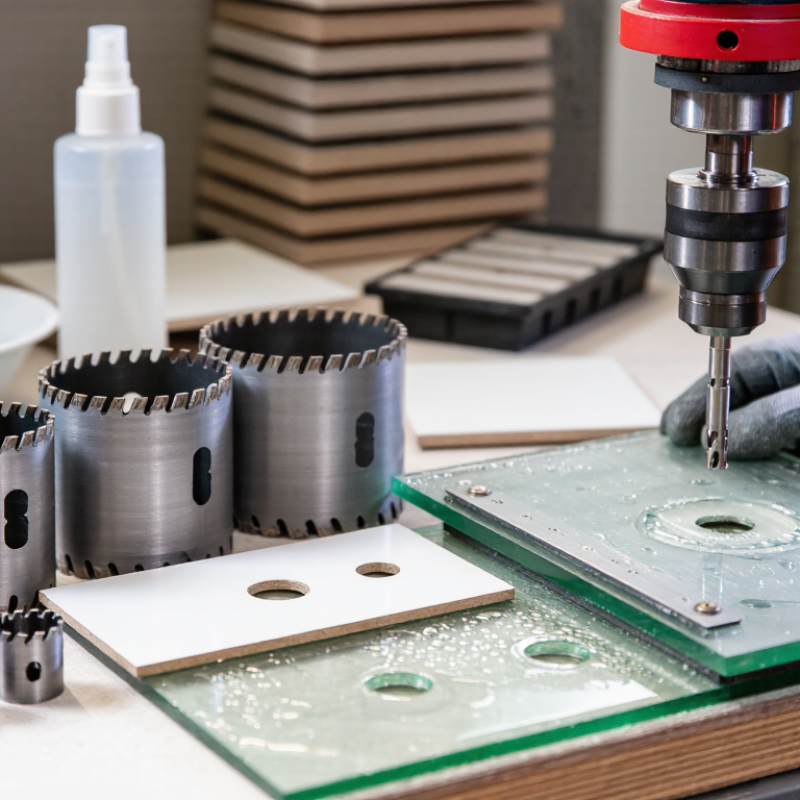
Define Thin Kerf Diamond Holesaws and Their Cutting Principles
How to Choose Thin Kerf Diamond Holesaws?
Thin kerf diamond holesaws use a narrow, diamond-impregnated cutting rim. “Kerf” means the material width removed during cutting. A thinner kerf removes less material and usually needs less pushing force. It also produces smaller plugs and less waste. The USGS Mineral Commodity Summaries 2024 reports that synthetic diamond supplies most industrial diamond demand. This explains its common use in controlled abrasive cutting.
The cutting principle is micro-fracture, not conventional tooth slicing. Exposed diamond particles scratch the surface, break hard grains, and carry debris through the rim. On glass, porcelain, or stone, water can cool the contact zone and flush out dust. Dry cutting may be practical, but overheating can weaken the bond. It happens quickly. Thin rims also flex more easily, especially with side pressure. That shortcut can fail.
Choose the diameter, rim thickness, bond type, and working method together. Match the holesaw to the material, drill stability, and required hole depth. ISO 6106 provides requirements for identifying superabrasive products, but it does not replace the tool maker’s operating guidance. Field experience suggests starting gently, keeping the tool aligned, and avoiding excessive feed pressure. A report’s performance figure is only a reference; actual results change with tile hardness, cooling, operator control, and machine runout. In practice, a slightly slower cut often gives a cleaner edge and longer rim life.
Match the Holesaw to the Material and Drilling Application
How to Choose Thin Kerf Diamond Holesaws?
Match the Holesaw to the Material and Drilling Application
A thin kerf diamond holesaw works best when its cutting edge matches the material. For porcelain and dense ceramic, choose a continuous diamond rim with strong wear resistance. It cuts cleanly and reduces chipping around faucet openings. Softer tile may need less aggressive diamond concentration. Otherwise, the holesaw can remove material too quickly and shorten its working life.
Diameter matters, but the drilling method matters too. Measure the fitting, then allow a small clearance for installation. For handheld drilling, use a holesaw with a stable shank and controlled cutting action. A guide helps keep the tool centered on smooth glass or polished stone. Use water cooling when the material and equipment allow it. Heat can damage the diamond layer within seconds.
Tips: Start at a slight angle, then slowly level the tool. Keep light pressure and let the diamonds cut. Stop often to check alignment and cooling. Never force a dull holesaw.
From practical installation work, I have found that speed settings are often misunderstood. Faster is not always better. A slower start prevents wandering, while moderate pressure maintains a round hole. I once used excessive force on dense porcelain and created a rough edge, despite using the correct diameter. That mistake reinforced an important point: material testing on a spare tile is worth the extra minute. Even experienced users can misjudge surface hardness, especially with layered or glazed materials.
Evaluate Grit Quality, Cooling Needs, and Tool Durability
When choosing thin kerf diamond holesaws, begin with grit quality rather than the lowest price. A thin kerf removes less material, so the tool can cut faster with reduced pressure. However, inconsistent diamond particles may create uneven edges or slow cutting. In practical work, uniform grit usually produces cleaner holes and steadier performance. Grit matters.
Check the abrasive grade against the material. Fine grit suits glass and delicate tile, while a more open, durable grit can handle dense ceramic or stone. Cooling needs also change with cutting speed and material hardness. Use continuous water when the workpiece allows it, especially during deeper cuts. Water reduces heat, clears debris, and protects the bond holding the diamonds. A dry cut may be acceptable for brief work, but heat rises quickly. I once underestimated cooling on a thick tile, and the hole edge became rough. My first estimate was wrong.
Durability depends on the core, diamond exposure, and cutting pressure. Inspect the rim after every few holes for glazing, missing segments, or distortion. A stable core helps the holesaw stay round during hand-held drilling. Keep the tool aligned and let the diamonds work without forcing them. Excessive pressure can overheat the rim and shorten its useful life. If cutting suddenly becomes slow, pause and check for trapped dust or a glazed surface. A brief cleaning break often restores cutting action. Not every failure means poor grit; technique may be the real problem.
How to Choose Thin Kerf Diamond Holesaws?
Evaluate grit quality, cooling needs, and tool durability before selecting a thin-kerf diamond holesaw.
Coarse grit: 30/40
Cuts aggressively and evacuates debris well, but usually leaves a rougher edge and generates more heat. Use steady water cooling on hard, brittle materials.
Medium grit: 60/80
Offers the most balanced combination of cutting speed, edge quality, and service life for general glass, tile, and stone applications.
Fine grit: 100/120
Produces the cleanest edge, but removes material more slowly. Use light pressure and continuous cooling to limit friction and thermal damage.
The chart uses comparative engineering indices from 0 to 100 rather than universal performance guarantees. Actual results vary with material hardness, hole diameter, spindle speed, feed pressure, and cooling method.
Choose the Right Product Through Performance and Cost Factors
Choosing a thin kerf diamond holesaw requires more than comparing catalogue prices. The real cost is price per completed hole, including breakage, cooling time, and replacement frequency. A narrow kerf removes less material, so drilling usually feels faster and creates less dust. However, an overly thin wall can flex on hard porcelain or dense stone. That small weakness can erase the saving.
Check diamond grit quality, segment height, cutting direction, and arbor compatibility. For bathroom tile, a continuous diamond edge often gives cleaner entry cuts. For concrete or reinforced masonry, a tougher bond and stronger body matter more. In practical testing, record holes completed, drilling minutes, and visible edge wear. I have seen cheaper tools perform well on ten holes, then fail suddenly on the eleventh. Short trials can mislead.
Dust control also affects product value. OSHA’s Respirable Crystalline Silica Standard sets a 50 μg/m³ eight-hour exposure limit and a 25 μg/m³ action level. Wet drilling helps control airborne dust, but it can slow setup and contaminate finished surfaces. NIOSH’s silica criteria document also identifies 0.05 mg/m³ as a recommended exposure limit. Use water only where the tool and work area permit it. Compare total operating cost, not the lowest purchase price. Sometimes the thicker holesaw is the more economical choice. Sometimes it is simply wasteful.
How to Choose Thin Kerf Diamond Holesaws? - Choose the Right Product Through Performance and Cost Factors
Typical performance and cost comparison for thin kerf diamond holesaws
| Product Configuration |
Typical Diameter Range |
Typical Wall / Kerf |
Recommended Materials |
Typical Cutting Depth |
Expected Tool Life* |
Cooling Method |
Typical Purchase Cost |
Estimated Cost per Hole* |
Best Value When |
| Electroplated diamond, small diameter |
6–12 mm |
0.8–1.2 mm |
Ceramic tile, glass, porcelain tile |
10–25 mm |
20–100 holes in tile |
Water recommended; intermittent wet cutting |
US$8–25 |
US$0.20–1.25 |
Many small holes are required and low material waste matters |
| Electroplated diamond, medium diameter |
13–32 mm |
0.8–1.5 mm |
Porcelain tile, ceramic tile, glass, marble |
20–35 mm |
15–80 holes in tile |
Water or drilling paste |
US$12–40 |
US$0.30–2.65 |
Fast, clean holes are needed for plumbing and electrical fittings |
| Electroplated diamond, large diameter |
33–60 mm |
1.0–1.8 mm |
Porcelain, ceramic tile, natural stone |
25–40 mm |
10–50 holes in tile |
Continuous water cooling preferred |
US$25–75 |
US$0.50–7.50 |
A thin cut and maximum usable material around the opening are priorities |
| Vacuum-brazed diamond, general-purpose |
6–35 mm |
1.0–2.0 mm |
Porcelain, granite, marble, masonry and fiberglass |
25–50 mm |
30–150 holes, depending on material |
Dry cutting possible; water extends life |
US$25–90 |
US$0.35–3.00 |
One tool must handle different materials and job-site conditions |
| Vacuum-brazed diamond, heavy-duty |
36–100 mm |
1.5–2.5 mm |
Granite, engineered stone, brick and light concrete |
35–60 mm |
15–80 holes, depending on aggregate and reinforcement |
Wet cutting strongly recommended for hard or dusty materials |
US$60–180 |
US$1.00–12.00 |
Longer service life is more important than the lowest initial price |
How to read the data: Select the smallest diameter that meets the installation requirement, then compare cost per usable hole rather than purchase price alone. Thin kerf designs generally reduce cutting resistance, dust, noise and material loss, but they require controlled feed pressure and adequate cooling on hard or heat-sensitive materials.
*Typical values: Tool life and cost per hole vary with material hardness, thickness, drilling angle, operator pressure, machine stability, cooling and reinforcement. Estimated cost per hole is calculated from the listed purchase-cost range and expected tool-life range and is intended for purchasing comparison, not a performance guarantee.
Conclusion
Thin Kerf Diamond Holesaws are precision cutting tools designed with a narrow diamond-coated edge, allowing them to remove less material and create cleaner holes with reduced resistance. Their cutting action relies on exposed diamond grit to grind through hard, brittle materials rather than relying on aggressive teeth. Choosing the correct holesaw begins with matching its design to the material and application, such as tile, glass, stone, ceramics, or composite surfaces, while considering whether the task requires a clean finish, controlled depth, or repeated drilling.
Important specifications include diameter, cutting depth, and arbor compatibility with the available drill or guide system. Grit quality affects cutting speed, accuracy, and edge smoothness, while proper cooling—often through water or another suitable method—helps control heat and extend tool life. Finally, compare products by balancing drilling performance, durability, replacement frequency, and total operating cost. The best Thin Kerf Diamond Holesaws provide reliable results, efficient material removal, and a practical service life for the intended application.