China has become a major source of Vacuum Brazed Core Drills for construction, stone processing, utilities, and professional renovation. Manufacturers compete through diamond quality, brazing control, drilling speed, and production consistency. A reliable factory should explain its materials, testing methods, and quality records clearly.
Experienced buyers often inspect more than catalogue photos. They check segment height, core barrel strength, thread accuracy, and cooling performance. A well-made drill should cut cleanly through concrete, brick, granite, or engineered stone. It should also resist premature diamond loss during continuous work. Practical tests matter. A sample drilled into reinforced concrete can reveal vibration, heat buildup, and cutting stability within minutes.
China’s leading manufacturers usually offer custom diameters, connection types, working lengths, and packaging. Some support private labeling and small trial orders. However, claims about “fastest drilling” deserve careful review. Actual performance changes with machine power, operator pressure, material hardness, and water supply. No supplier is perfect. Even a capable factory may need better documentation or clearer communication.
This guide examines China’s Vacuum Brazed Core Drills manufacturers through product quality, manufacturing experience, technical support, customization, and customer reliability. It considers factory inspection, certifications, sample testing, and after-sales service. The goal is practical comparison, not exaggerated promotion. Buyers can use these details to identify suitable partners, reduce purchasing risks, and choose tools that perform consistently on real job sites.
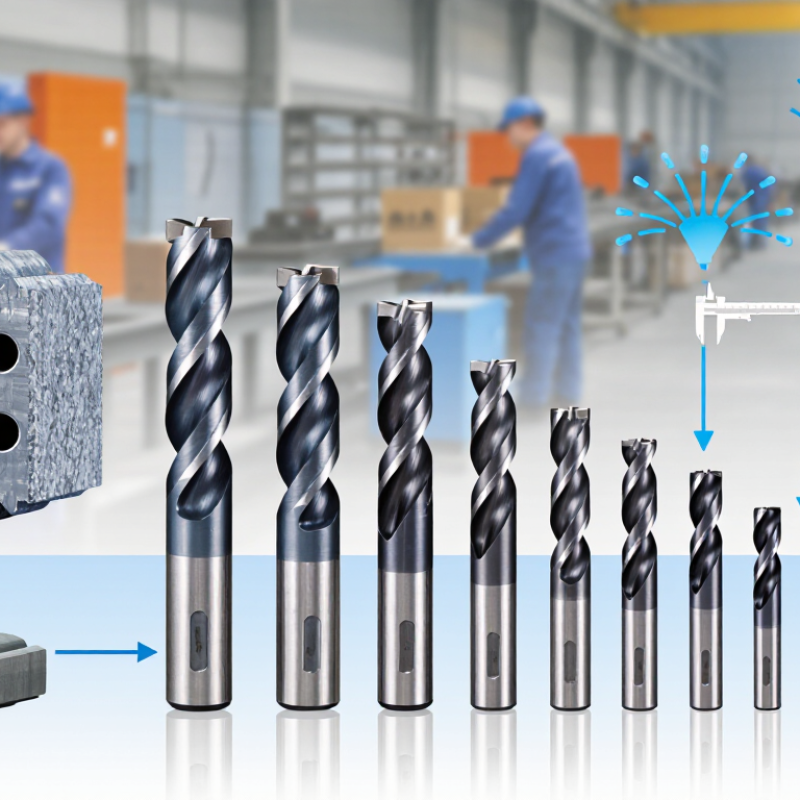
China Top Vacuum Brazed Core Drills Manufacturers
Vacuum brazed core drills use diamond segments fixed directly to a steel tube through a high-temperature brazing process. The operation occurs in a controlled vacuum, which improves wetting and reduces oxidation. Unlike electroplated tools, vacuum brazing can expose more diamond grains for aggressive cutting.
The structure is simple but demanding. It includes a steel body, a brazed alloy layer, and evenly distributed synthetic diamonds. The body transfers torque, while the diamond layer cuts concrete, stone, ceramics, or composite materials. According to the USGS Mineral Commodity Summaries 2024, synthetic diamond remains the dominant form of industrial diamond used in cutting and drilling applications. That matters because grain quality strongly affects drilling speed and edge stability.
During operation, rotation and controlled feed press the exposed diamonds against the workpiece. Each grain creates small fractures and removes material as chips. Water cooling carries away heat and debris. MarketsandMarkets’ 2024 Diamond Tools Market report projects continued growth through 2028, driven partly by construction and infrastructure demand. However, market growth does not guarantee tool quality. A bright braze line may look convincing, yet uneven diamond spacing can cause vibration, overheating, and premature failure. Manufacturers should inspect grain distribution, braze penetration, tube concentricity, and runout. Small defects become obvious in deep holes. The design is efficient, but not forgiving.
Vacuum brazed core drills serve demanding construction tasks across China. Their diamond particles are bonded firmly to the drilling surface, supporting stable cutting in reinforced concrete, granite, marble, and masonry. Contractors often use them for anchor holes, pipeline openings, ventilation routes, and bridge repair work. They are also useful on renovation sites where clean, accurate holes matter more than speed.
Field experience shows that dry drilling suits smaller holes and controlled indoor work. Wet drilling performs better in dense concrete and reduces dust during deeper cuts. Industrial plants may use these tools for equipment installation, while road projects need reliable drilling through aged concrete and mixed aggregates. Still, performance is not automatic. A powerful drill cannot correct the wrong segment design or excessive pressure. I have seen operators overheat a core drill within minutes. The tool survived, but its cutting efficiency dropped noticeably.
Tips: Match the drill diameter, material, and rotation speed before work begins. Keep the bit aligned and apply steady pressure. Use water when the material generates heavy heat or dust. Inspect segments after every major hole. Small cracks deserve attention. Allow cooling pauses on long applications, especially in summer construction zones. Local aggregate hardness can vary, so trial drilling remains a practical quality check.
Typical upper-end core diameter ranges commonly used with vacuum brazed diamond core drills across major construction and fabrication applications in China.
Vacuum brazed core drills are widely applied for dry or wet drilling in reinforced concrete, masonry, natural stone, asphalt, and ceramic or tile materials. The diameter values represent typical upper working ranges rather than company sales or market-share data.
How to Evaluate China’s Vacuum Brazed Core Drill Manufacturers
When evaluating China’s vacuum brazed core drill manufacturers, start with cutting performance, not catalog language. Ask how the supplier controls diamond exposure, braze penetration, and steel-tube alignment. A reliable factory should explain its production process clearly. Request samples for concrete, brick, and reinforced sections. Record drilling speed, edge wear, heat marks, and hole roundness. Short tests reveal more.
Review the manufacturer’s quality system before discussing large orders. Check incoming diamond inspection, brazing temperature records, final runout testing, and batch traceability. A capable supplier should provide consistent dimensions and clear inspection reports. Ask about tooling maintenance and operator training. These details often separate a real production line from a trading office.
Communication also deserves careful attention. Confirm thread standards, drill sizes, packaging, cooling requirements, and replacement policies in writing. Request recent factory images, sample data, and references from comparable applications. Certifications can support trust, but they should not replace product testing. A polished catalog is not proof. I would also examine how the supplier handles a failed sample; honest explanations are valuable. Some factories may promise faster drilling than field conditions allow. That is a warning, not a small issue. Cost matters, but unstable performance creates greater losses through damaged equipment and repeated work. Look for evidence, consistent replies, and measurable results.
Reliable vacuum brazed core drills begin with controlled manufacturing standards. Experienced manufacturers inspect diamond grit, steel bodies, and brazing materials before production. Each batch should carry traceable records, including material source, furnace temperature, and processing time.
Quality control should include dimensional checks, segment alignment, thread accuracy, and body runout. A calibrated gauge can reveal small deviations before drilling begins. Practical testing should cover concrete, masonry, and reinforced surfaces under controlled conditions.
Inspectors can record cutting speed, vibration, heat buildup, and segment wear. These details show more than a polished product photograph.
Customization is useful when the application is clearly defined. Buyers may request specific diameters, working lengths, shank types, segment formulas, or cooling requirements.
Manufacturers should confirm these choices through technical drawings and sample testing. A tool designed for dry drilling may not perform well in wet applications. That limitation deserves honest discussion.
No production system is perfect, and overly aggressive cutting speed can still damage the core drill. A dependable supplier explains operating limits, inspection methods, and expected service conditions. This transparency supports safer purchasing decisions and more consistent field results.
China’s vacuum brazed core drill market deserves careful supplier screening. MarketsandMarkets projected the global diamond tools market to grow from about USD 10.4 billion in 2023 to USD 14.5 billion by 2028. Demand is rising, but forecasts do not prove product quality.
Ask for process evidence, not attractive catalog photographs. A reliable Chinese supplier should explain diamond grit size, brazing temperature, steel grade, and segment geometry. Request batch records and a current ISO 9001 certificate. Then test samples on the material you actually cut. Concrete, granite, and reinforced slabs produce different wear patterns. Check drilling speed, edge retention, vibration, and the number of holes completed.
Safety documentation also matters. EN 13236 addresses safety requirements for diamond and abrasive tools. Suppliers should provide compatible speed ratings, inspection procedures, and clear packaging labels. Review dimensional tolerances, including arbor accuracy and core barrel runout. A small alignment error can create visible wobble during dry drilling. Ask for inspection photos with measurement data, not only factory videos.
The International Trade Centre and UN Comtrade databases can help compare China’s export activity under relevant HS codes. However, trade volume alone cannot confirm manufacturing capability. Some factories outsource brazing or final inspection. This is where buyers often become too optimistic. Arrange a live video audit, verify the production address, and request references from comparable construction applications. My own practical preference is simple: approve a small trial order first, record every failure, and make the supplier answer each one in writing.
| Evaluation Dimension | Practical Specification or Benchmark | Why It Matters | Recommended Verification |
|---|---|---|---|
| Brazing Method | Vacuum-brazed diamond segments or diamond grit fixed directly to the working edge. | The process affects diamond retention, cutting speed, heat resistance, and tool life. | Request process photographs, a technical description, and a sample cutting test. |
| Compatible Materials | Concrete, reinforced concrete, brick, block, masonry, stone, ceramic tile, glass, or other materials stated in the product data sheet. | Diamond concentration and grit selection must match the workpiece hardness and reinforcement. | Confirm the intended material list and test both plain and reinforced substrates when applicable. |
| Available Diameter Range | Common core-drill diameters range from approximately 5 mm to 150 mm, with larger sizes available for specialized equipment. | The required hole diameter determines the tool body, motor load, cooling demand, and drilling speed. | Compare the supplier’s dimensional drawing, tolerance, and actual measured sample. |
| Working Length | Select a working length that exceeds the required hole depth while allowing water flow and chip removal. | Insufficient length can cause binding, overheating, and incomplete penetration. | Check total length, usable cutting length, wall thickness, and extension compatibility. |
| Shank and Connection | Common connections include M14, 1/2"-20, 5/8"-11, 1-1/4"-7, SDS, and other machine-specific fittings. | A correct connection ensures secure mounting and prevents vibration or thread damage. | Provide the machine model, spindle thread, arbor dimensions, and required adapter details. |
| Wet or Dry Drilling | Wet drilling is generally preferred for dust control, cooling, and longer tool life; dry-rated tools should be clearly identified. | Using a dry tool with water, or a wet tool without adequate cooling, may reduce performance or create a safety risk. | Request the approved operating method and a written cooling requirement. |
| Operating Speed | RPM must be selected according to diameter, material, machine power, and wet or dry operation; there is no universal safe RPM. | Excessive speed can overheat the tool, while insufficient speed can reduce cutting efficiency. | Require a diameter-specific speed chart and verify it against the drilling-machine manual. |
| Runout and Balance | Low radial runout and a concentric tool body are essential; the supplier should state its inspection method and internal tolerance. | Poor concentricity causes vibration, uneven wear, oversized holes, and connection stress. | Ask for inspection records and measure the sample using a dial indicator or suitable gauge. |
| Diamond Grit and Distribution | Grit size and distribution should be selected for the target material; a consistent working edge is preferable to visibly uneven diamond placement. | Grit selection influences cutting aggressiveness, surface finish, and resistance to premature glazing. | Request the grit range, diamond grade description, and magnified inspection images. |
| Cooling and Water Delivery | Wet tools should have a clear water path and be used with a continuous, adequate water supply. | Effective cooling limits thermal damage and helps flush drilling debris from the hole. | Confirm water-entry design, recommended flow conditions, and whether the tool supports dust-extraction accessories. |
| Quality-Control System | Documented incoming-material inspection, in-process checks, final dimensional inspection, and batch traceability. | Repeatable quality is more important than a single successful sample. | Request a sample inspection report, batch number format, and corrective-action procedure. |
| Compliance Documentation | Applicable product documentation may include technical data sheets, safety information, material declarations, and quality certificates. | Complete documentation supports import clearance, safe operation, and internal purchasing approval. | Verify certificate scope, validity, issuing organization, and whether the documents apply to the supplied product. |
| Sample and Field Testing | A representative sample should be tested on the actual material, machine, diameter, cooling method, and drilling depth. | Laboratory claims may not reflect job-site conditions, reinforcement density, or operator technique. | Record cutting time, hole quality, tool wear, water use, vibration, and number of holes completed. |
| Dimensional Consistency | Diameter, total length, cutting length, shank dimensions, and wall thickness should remain consistent between batches. | Consistent dimensions simplify machine setup and reduce installation or replacement problems. | Approve a signed drawing and compare pre-shipment measurements with the approved sample. |
| Packaging and Protection | Use protective caps, anti-impact packaging, moisture protection where appropriate, and clear size or batch labels. | Proper packaging reduces thread damage, edge impact, corrosion, and identification errors during transport. | Request packaging photographs and confirm carton strength, labeling, and pallet requirements. |
| Production and Delivery Planning | Lead time should be confirmed separately for samples, standard sizes, customized sizes, and repeat orders. | Different diameters, connections, and packaging requirements can substantially change production schedules. | Obtain a written production schedule, inspection date, shipping terms, and contingency plan. |
| Warranty and Technical Support | The supplier should define coverage, exclusions, claim evidence, replacement policy, and response time. | Clear after-sales terms reduce risk when performance differs from the approved specification. | Review the written warranty and agree on acceptable evidence, such as photographs, batch data, and test records. |
They can cut reinforced concrete, granite, marble, masonry, and mixed aggregates. Cutting stability depends on segment design and material hardness. Local conditions vary.
Common tasks include anchor holes, pipeline openings, ventilation routes, equipment installation, and bridge repairs. They also suit renovation work requiring clean, accurate holes.
Dry drilling suits smaller holes and controlled indoor applications. It can simplify setup where water use is limited. Dust still needs proper control.
Wet drilling works well in dense concrete and deeper cuts. Water reduces heat and dust around the drilling area. Keep the work zone controlled.
Use steady pressure and the correct rotation speed. Allow cooling pauses during long cuts, especially in hot weather. Excessive pressure causes trouble quickly.
Match the diameter, working length, shank type, material, and cooling method to the application. Confirm technical drawings and sample-test results. Photos are not enough.
Checks should cover diamond grit, steel bodies, brazing materials, dimensions, thread accuracy, alignment, and body runout. Testing should measure speed, vibration, heat, and segment wear.
Look for small cracks, uneven wear, damaged threads, and visible body runout. Small defects deserve attention. I would not ignore them.
No. Custom diameters, segment formulas, and cooling requirements can improve suitability. They cannot fix poor alignment, excessive pressure, or unsuitable operating conditions. Some limitations remain.
Vacuum Brazed Core Drills are precision cutting tools designed with diamond segments permanently bonded to the core through a high-temperature brazing process. This structure provides strong segment retention, efficient heat dissipation, and fast drilling performance across materials such as concrete, stone, masonry, ceramics, and certain engineered surfaces. In China, these drills are widely used in construction, renovation, infrastructure, plumbing, electrical installation, and industrial fabrication, where clean holes and stable performance are essential.
When evaluating Chinese manufacturers, buyers should examine production capabilities, material selection, brazing technology, dimensional accuracy, and consistency between batches. Reliable suppliers should follow recognized manufacturing and quality-control practices, conduct inspections throughout production, and offer suitable customization in diameter, length, segment design, connection type, and packaging. A careful buying decision should also consider sample testing, minimum order quantities, delivery reliability, technical communication, after-sales support, and the supplier’s ability to meet application-specific requirements.