Choosing the best Wet and Dry Diamond Blades in China depends on the material, tool, and working conditions. A blade that cuts porcelain tile cleanly may struggle with reinforced concrete. Wet cutting can help control heat and dust, while dry cutting suits locations without water access. The trade-off is real. Tool compatibility matters, too. Check the blade diameter, arbor size, maximum operating speed, and the saw or grinder manufacturer’s instructions before buying.
A useful comparison should look beyond price and bold product claims. Examine the bond and segment design, intended materials, cutting stability, and expected service life. For example, a contractor cutting dense tile may value a clean edge and fewer chips, while a masonry crew may prioritize steady progress through concrete. Ask suppliers for clear specifications, application guidance, and consistent quality-control information. Where possible, compare sample cuts under similar conditions. Small details count.
There is no universal winner. Some specifications look impressive on paper but tell little about performance on a real jobsite. That deserves scrutiny. This guide will explain how to assess Chinese-made options, distinguish wet-only, dry-only, and combination blades, and match a blade to common cutting tasks. It will also consider safety, value, and supplier reliability, so readers can make a more informed choice without treating marketing language as proof.
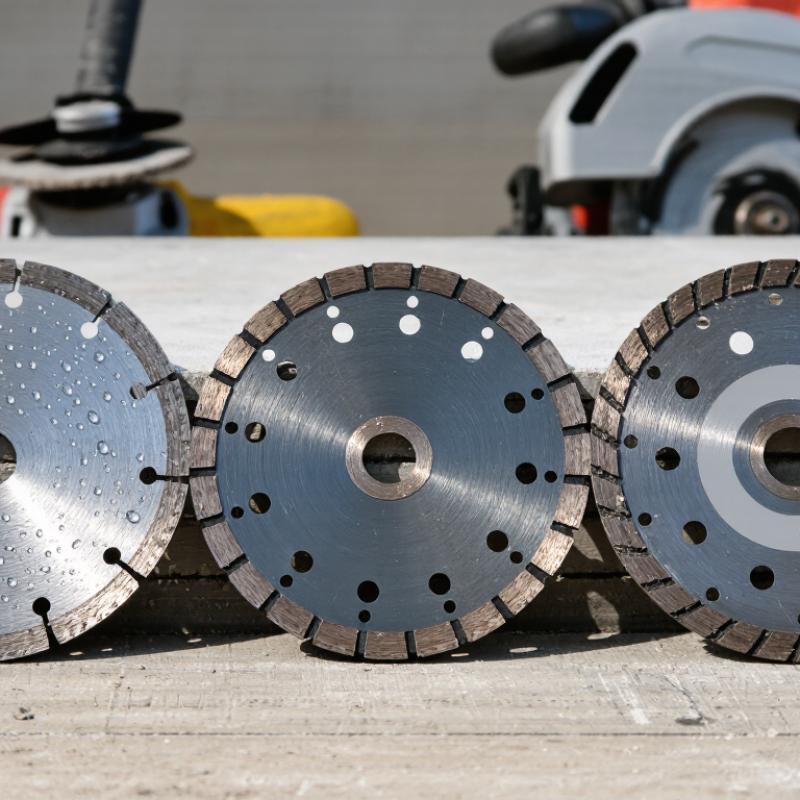
Understanding Wet and Dry Diamond Blades
Wet and dry diamond blades use diamond particles fixed to a metal rim or segmented edge. The key difference is how heat and dust are managed. A wet blade receives water during cutting, which cools the edge and helps carry away slurry. It often suits repeated cuts in tile, stone, or concrete when a steady water supply is available. The cut can feel smoother. Cleanup takes longer.
A dry blade works without water and is useful for quick cuts or sites where wet cutting is impractical. Its segments need airflow and pauses to shed heat; forcing the blade can shorten its life or damage the material. Some blades are rated for both methods, but that label does not make every blade suitable for every surface. Check the blade’s specifications against the material, tool speed, and cutting method. Wear eye, hearing, and respiratory protection, especially during dry cutting, where fine dust can spread across a work area. Not a universal solution. I would still test a small offcut first: material hardness and blade behavior can vary, and a clean-looking first pass is not always a reliable guide.
Blade diameter is selected to match the tool and its cutting capacity. Wet or dry use depends on the blade’s design and the tool’s instructions.
The chart shows common nominal blade sizes, not a performance comparison. Before cutting, check the blade’s permitted use, arbor size, maximum RPM, and tool manual. Do not use a blade marked for wet cutting only without water.
Diamond blade performance depends on more than the amount of diamond in its rim. Segment shape, bond hardness, and core design all affect how smoothly a blade cuts. A segmented rim leaves gaps that help clear debris and release heat, making it useful for many dry-cutting tasks. A continuous rim can produce a cleaner edge, especially on tile, but usually benefits from water cooling.
The bond holds the diamond particles in place and wears as the blade cuts. A harder bond may last longer in abrasive materials, while a softer bond can expose fresh diamonds more readily in dense materials. The right match depends on the workpiece, not just its label. Small details matter. A narrow kerf can reduce resistance, but a thin core may be less forgiving if the blade is pushed sideways. Let the blade do the work.
Wet cutting helps control dust and temperature, and can support a steadier cut. Dry-cutting blades suit jobs where water is impractical, but they need pauses to cool when specified by the manufacturer. Heat changes everything. I have seen careful setup matter as much as blade choice: secure the material, use the correct tool speed, and avoid forcing the cut. Even a well-matched blade can chip tile or wear quickly when pressure, alignment, or cooling is wrong.
What Are the Best Wet and Dry Diamond Blades in China?
Comparing Wet and Dry Blades by Material and Application
The best blade depends on the material, cutting method, and machine—not simply where it was made. For porcelain tile, a fine-rim wet blade can help limit chipping and keep the cut cool. Natural stone also benefits from water when heat or dust is a concern. Match the blade diameter and arbor size to the saw, and check its rated speed before use. Details matter.
For concrete, brick, and some masonry, segmented dry blades allow portable cutting without a water supply. Use short, controlled passes and follow the blade maker’s guidance on cooling intervals. Dry cutting creates substantial dust, so use suitable extraction and protective equipment. A common shop-floor mistake is choosing by material name alone: thickness, hardness, and reinforcement can change how a blade performs. When comparing blades made in China, review specifications, segment attachment, and test-cut consistency. No chart replaces a cautious trial on the actual material.
Tips: Keep wet blades supplied with water. Let dry blades cool as directed. Inspect for damage before each cut, and stop if vibration or unusual noise develops. The right choice may still need adjustment.
| Material or Task | Suitable Blade Design | Preferred Use | Typical Applications | Key Considerations |
|---|---|---|---|---|
| Porcelain tile and dense ceramic tile | Continuous-rim blade, often with a thin rim for controlled cutting | Wet cutting is generally preferred | Tile installation, straight cuts, and trimming hard tile | Water helps cool the rim and reduce dust and edge chipping. Use a blade rated for the tile and cutting method. |
| Glazed ceramic tile | Continuous-rim blade | Wet cutting for cleaner edges; dry use only when the blade and tool are rated for it | Wall and floor tile cuts around fixtures and edges | Feed steadily and avoid twisting the blade in the cut. A suitable tile saw can improve cut quality. |
| Concrete pavers and masonry blocks | Segmented-rim blade with gullets between segments | Wet or dry, depending on the blade, tool, and site conditions | Patios, paving, landscaping, and general masonry work | Segments help with airflow and debris clearance. Dry cutting produces hazardous respirable dust; use appropriate dust controls. |
| Cured concrete | Segmented or turbo-rim blade selected for the concrete and saw | Wet cutting is useful for cooling and dust suppression; dry cutting requires a dry-rated blade and suitable controls | Concrete slabs, openings, and repair work | Concrete hardness, aggregate, reinforcement, and blade bond affect wear and cutting performance. Follow the saw and blade limits. |
| Brick and general masonry | Segmented-rim blade | Wet or dry, if specifically permitted by the blade instructions | Brickwork, mortar joints, blocks, and masonry repairs | Choose a blade intended for masonry. Control dust when cutting dry and avoid using a blade beyond its rated speed. |
| Granite and other hard natural stone | Continuous-rim or turbo-rim blade designed for stone | Wet cutting is commonly preferred | Stone tiles, countertops, and stone fabrication | Water supports cooling and dust control. Confirm the blade is suitable for the stone and the saw’s operating conditions. |
| Marble and softer natural stone | Fine-rim continuous blade designed for stone | Wet cutting is generally preferred for finish quality | Decorative stone panels, tiles, and finish cuts | Use a controlled feed to reduce edge damage. Blade selection should match the stone and desired finish. |
| Mixed tile and masonry work | General-purpose or combination blade, only when its rating covers both materials | Use the wet or dry method specified by the manufacturer | Renovation and jobs involving more than one compatible material | A combination blade may involve a trade-off in cutting speed or finish. Check material compatibility rather than relying on the “general-purpose” label alone. |
| Selection and safety: There is no single best blade for every job. Match the blade to the material, saw, blade diameter, arbor, and rated operating speed. Use water only with equipment designed for wet cutting, and use effective dust controls and appropriate respiratory protection for dry cutting. Always follow the blade and tool instructions. | ||||
Choosing a diamond blade in China starts with the material, not the price. Concrete, granite, and ceramic tile each need a suitable bond and segment design. Hard, dense materials often cut better with a softer bond, which exposes fresh diamond grit sooner. Check the blade diameter, arbor size, and rated speed against the saw. Fit matters.
Wet and dry blades are not interchangeable by default. Wet cutting helps cool the rim and control dust; dry blades are designed for specific machines and cutting cycles.
OSHA’s 2016 respirable crystalline silica standard sets a permissible exposure limit of 50 micrograms per cubic meter over eight hours, with an action level of 25. Treat these figures as a safety benchmark, not a substitute for Chinese requirements or site controls.
For purchasing, ask suppliers for test details: material, cut depth, feed rate, machine power, and blade life. Compare consistent trials, not broad claims such as “fast cutting.” A few meters through reinforced concrete can reveal vibration, glazing, or uneven wear. One weak point in many comparisons is inconsistent operator pressure. I would still verify dry-cut intervals and water flow on the actual saw; paper specifications miss real site conditions.
A diamond blade is only safe when it suits the saw, material, and cutting method. Check its label before use: not every blade is rated for both wet and dry cutting. Inspect the rim, segments, and arbor hole for cracks, missing pieces, or damage. Stop at once if anything looks wrong. Secure the workpiece, keep the guard in place, and wear eye, hearing, and respiratory protection. For wet cutting, maintain steady water flow to control heat and dust. Never assume a wet-rated blade can run dry. I have seen rushed setup cause more trouble than a slow cut ever would.
Let the blade cut at its own pace; pushing hard can overheat it and shorten its service life. If the saw vibrates, the cut wanders, or the blade discolors, stop and check the setup rather than forcing it onward. Small details matter. After wet work, rinse off slurry and dry the blade before storage. Keep it flat or properly supported, away from impact and moisture. A blade’s useful life depends on the material, cutting pressure, cooling, and storage, so there is no reliable fixed number of cuts. Even experienced operators can miss early wear when focused on the job. Regular inspection is worth the extra minute.
Wet blades use water to cool the cutting edge and carry away slurry. Dry blades work without water and need airflow and cooling pauses.
It can suit repeated cuts in porcelain tile, natural stone, or concrete. Water may help reduce heat and chipping, but cleanup takes longer.
A dry blade can be useful for portable cuts when water is unavailable. Use controlled passes and follow the blade’s cooling guidance. Not a free pass.
No. Blade design, bond, and segments should match the material. Tile, granite, concrete, and brick can behave differently under the same cut.
Match its diameter and arbor size to the saw. Check the rated speed and confirm the blade suits the material and cutting method. Fit matters.
Ask for test details, including material, cut depth, feed rate, machine power, and blade life. Compare trials made under similar conditions, not broad speed claims.
Fine dust can spread across the work area. Use suitable dust extraction, eye protection, hearing protection, and respiratory protection.
Stop cutting and inspect the blade for damage. Check its fit and operating conditions before continuing. I would test an offcut first, too. A clean first pass proves little.
Choosing the best Wet and Dry Diamond Blades in China starts with understanding how each type handles heat and dust. Wet blades use water to cool the cutting edge, reduce airborne dust, and support sustained work, while dry blades offer greater portability when water is unavailable. Segment shape, bond hardness, diamond concentration, and blade thickness also influence cutting speed, finish, and service life.
The right blade depends on the material, the tool, and the job: compare the intended use for concrete, stone, tile, or other masonry, and check blade diameter, arbor size, and operating limits. Consider cutting precision, work volume, cooling needs, and overall value when choosing. For safer, longer-lasting performance, follow the tool and blade instructions, secure the workpiece, use suitable protective equipment, and inspect the blade before use. Clean and store it properly, and replace it if damaged or excessively worn.