A magnetic drill press can make clean holes in steel beams, plates, and other ferrous workpieces without a full-size workshop setup. The right model can save time on a job site. The wrong one may feel awkward, run hot, or lose stability on a surface that is thin, curved, or poorly prepared. Magnetic Drill Presses differ in weight, cutting capacity, motor speed, magnet strength, and compatibility with annular cutters. Small details matter. A short power cord or hard-to-reach controls can complicate overhead work.
This guide to the 10 Best Magnetic Drill Presses for 2026 focuses on practical selection, not just headline specifications. It considers drilling capacity, portability, speed control, safety features, and the kinds of tasks each tool may suit. Product specifications can change, so confirm current details and follow the manufacturer’s instructions before use. Check that the work surface is clean, flat, and thick enough for secure magnetic attachment. A spec sheet never tells the whole story. Nor does one drill suit every crew. Some buyers may prefer a lighter unit, while others need more cutting capacity and sustained power. The comparisons ahead aim to make those trade-offs easier to judge, while leaving room for a simple truth: fit and safe setup matter as much as the machine itself.
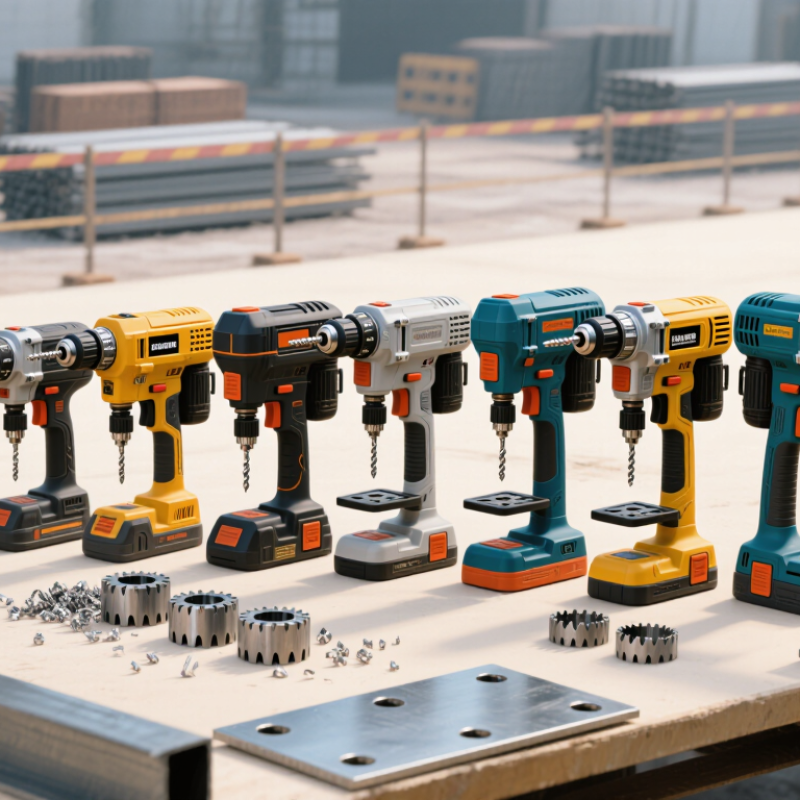
A magnetic drill press is a portable machine designed to drill holes in steel. Unlike a bench drill, it uses a strong magnetic base to hold itself against a ferrous surface. That makes it useful on beams, plates, and other large workpieces that are difficult to move. It cannot attach reliably to every metal. Aluminum and stainless steel may not provide the magnetic grip needed.
The operator places the base on a clean, flat area and switches on the magnet. A motor then turns a cutter held in an arbor. Many models use an annular cutter, which removes a ring of material rather than grinding away the entire hole. This can make larger holes faster, though the right cutter and feed pressure still matter. A pilot pin helps position the cutter and can release coolant near the cutting edge. Small detail. Easy to miss.
Before drilling, check that the surface is suitable and the base sits firmly. Paint, chips, or a curved surface can weaken contact. On vertical or overhead work, use the safety restraint specified by the machine’s instructions. Keep hands clear of the rotating cutter, and disconnect power before changing accessories. Magnetic force is helpful, not a substitute for careful setup. I would not trust a quick visual check alone; a loose chip under the base can change the hold.
When comparing magnetic drill presses for 2026, look beyond the motor’s advertised power. Check the magnet’s holding force and the minimum steel thickness required for secure attachment. Thin, painted, rusty, or uneven surfaces can reduce grip. Fit matters. A broad base may feel stable, but it still needs a clean, flat contact area. Nonferrous metals will not hold a standard magnetic base. For overhead or vertical drilling, check whether the machine has a safety strap and a clear method for securing it before work begins.
Compare spindle speed, cutter capacity, and usable stroke against the holes you actually need. Lower speeds often suit larger cutters, while smaller holes may call for faster settings. A variable-speed model offers flexibility, though extra controls are not automatically better. Check that the machine accepts the cutter sizes and shank types you use. A built-in coolant system can help manage heat, but it adds parts to maintain; manual application may be less convenient. A small catch. Weight matters, too: a lighter press is easier to position, yet may feel less steady during demanding cuts. Compare listed specifications with the material thickness and working angle in your setup. Manufacturer ratings can assume ideal conditions, which real steel surfaces do not always provide.
| Rank | Recommended Type | Best For | Typical Annular Cutter Capacity | Typical Cutting Depth | Typical Speed Range | Typical Motor Input | Typical Stroke | Typical Machine Weight | Key Feature to Compare |
|---|---|---|---|---|---|---|---|---|---|
| 1 | Compact 25 mm class | Light fabrication and occasional site work | Up to 25 mm (1 in) | 25–50 mm (1–2 in) | Approx. 450–700 rpm | Approx. 600–900 W | Approx. 100–150 mm (4–6 in) | Approx. 8–12 kg (18–26 lb) | Low weight, easy carrying, and a secure attachment on suitable steel |
| 2 | Portable 30 mm class | Maintenance work and routine holemaking | Up to 30 mm (1 3/16 in) | 25–50 mm (1–2 in) | Approx. 300–600 rpm | Approx. 800–1,100 W | Approx. 120–170 mm (4 3/4–6 3/4 in) | Approx. 10–15 kg (22–33 lb) | Balance of portability, cutter capacity, and feed control |
| 3 | General-purpose 35 mm class | Everyday workshop and structural-steel drilling | Up to 35 mm (1 3/8 in) | 25–50 mm (1–2 in) | Approx. 250–450 rpm | Approx. 900–1,200 W | Approx. 150–200 mm (6–8 in) | Approx. 12–18 kg (26–40 lb) | Check cutter compatibility, feed-handle position, and overload protection |
| 4 | Variable-speed 35–40 mm class | Users working with different cutter sizes and materials | Up to 35–40 mm (1 3/8–1 9/16 in) | 25–50 mm (1–2 in) | Approx. 100–500 rpm, often in selectable ranges | Approx. 1,000–1,400 W | Approx. 150–210 mm (6–8 1/4 in) | Approx. 13–20 kg (29–44 lb) | Useful speed selection for matching cutter diameter and cutting conditions |
| 5 | Deep-cut 35 mm class | Thicker plate and deeper annular-cutter work | Up to 35 mm (1 3/8 in) | Up to about 75 mm (3 in), depending on cutter | Approx. 200–450 rpm | Approx. 1,000–1,500 W | Approx. 180–250 mm (7–10 in) | Approx. 14–21 kg (31–46 lb) | Confirm spindle travel and cutter reach, not just the advertised diameter |
| 6 | Heavy-duty 50 mm class | Frequent drilling of larger holes in structural steel | Up to 50 mm (2 in) | Up to about 50 mm (2 in) | Approx. 100–300 rpm | Approx. 1,200–1,800 W | Approx. 180–250 mm (7–10 in) | Approx. 18–30 kg (40–66 lb) | Prioritize rigidity, appropriate feed rate, and a strong, correctly rated base |
| 7 | Two-speed 40 mm class | Mixed-size holes in fabrication shops | Up to 40 mm (1 9/16 in) | 25–50 mm (1–2 in) | Approx. 100–450 rpm across two ranges | Approx. 1,000–1,500 W | Approx. 160–220 mm (6 1/4–8 3/4 in) | Approx. 15–23 kg (33–51 lb) | Mechanical speed ranges can provide useful torque at lower speeds |
| 8 | Low-profile 30 mm class | Drilling in restricted-clearance locations | Up to 30 mm (1 3/16 in) | 25–50 mm (1–2 in) | Approx. 250–500 rpm | Approx. 800–1,200 W | Approx. 60–130 mm (2 3/8–5 1/8 in) | Approx. 9–16 kg (20–35 lb) | Compare overall head height, handle clearance, and access for cutter changes |
| 9 | Cordless 30–35 mm class | Mobile work where mains power is unavailable | Typically up to 30–35 mm (1 3/16–1 3/8 in) | Typically 25–50 mm (1–2 in) | Model-dependent; commonly about 200–600 rpm | Battery-powered; commonly 18–36 V platforms | Approx. 120–180 mm (4 3/4–7 in) | Approx. 10–17 kg (22–37 lb), including battery | Check battery runtime, included battery capacity, and whether the base has a power-loss safeguard |
| 10 | Large-capacity 60 mm class | Heavy fabrication and larger-diameter holemaking | Up to 60 mm (2 3/8 in) | Typically 50–75 mm (2–3 in) | Approx. 80–250 rpm | Approx. 1,500–2,000 W | Approx. 200–300 mm (8–12 in) | Approx. 25–40 kg (55–88 lb) | Check transport needs, available power, cutter limits, and manufacturer-rated base capacity |
Specifications shown are representative ranges for commercial magnetic-drill classes, not ratings for a particular model. Actual capacity, speed, stroke, weight, and magnetic holding performance vary by machine and accessory. Verify the manufacturer's specifications and minimum workpiece thickness before use; magnetic holding force depends on steel thickness, surface condition, flatness, and setup.
A useful comparison of ten magnetic drill presses looks beyond motor ratings. Performance depends on how steadily each machine cuts, how securely its base holds, and how easily the operator controls the feed. On a thick steel plate, smooth feed can matter more than a headline power figure. It helps reduce chatter and keep a hole clean. Small details count.
Design affects daily handling. A compact drill can fit between a beam and a wall, while a larger base may feel more stable on broad stock. Check the handle position, control layout, and clearance for changing cutters. A low-profile housing is handy in tight spaces. Not always. Some compact designs leave less room for hands or accessories, a trade-off easy to miss in product photos.
Compare rated cutting capacity with the materials and hole sizes you actually expect to work with. Also consider mass, cable routing, coolant access, and how clearly the drill indicates that its magnet is engaged. These details shape setup time and confidence on site. Specifications alone cannot show how a machine feels through a full cut, so treat performance claims as a starting point, not a verdict. A slightly awkward control may be manageable; a weak-feeling hold deserves closer attention.
Comparison framework: the editorial weight assigned to performance and design criteria when evaluating ten magnetic drill presses.
These percentages are evaluation weights, not measured specifications or product scores. Drilling capacity and motor performance receive the greatest emphasis; magnetic stability, portability, and usability round out the comparison.
Choosing a magnetic drill press starts with the job, not the largest advertised holding force. For beam work, check machine weight, clearance, stroke, and magnet performance on the actual steel surface. Rust, paint, and curved sections can weaken contact. A safety chain adds backup when drilling vertically or overhead. It is easy to overlook setup space.
In fabrication shops, repeated holes favor steady feed control, suitable cutter capacity, and reliable coolant delivery. Match cutter diameter and cutting depth to the plate, then confirm the drill’s speed range suits the material. For stainless steel, avoid forcing the cutter; heat and chipped teeth can quickly spoil a hole. I would still test on scrap when the material grade is uncertain.
Operator exposure matters during long shifts. The UK Health and Safety Executive’s hand-arm vibration guidance sets a daily action value of 2.5 m/s² A(8) and a limit value of 5.0 m/s² A(8). These are exposure benchmarks, not a rating for every drill. Check the tool’s vibration information and account for actual trigger time, task, and maintenance. A lighter drill may suit short access jobs, but it is not automatically the safest choice.
Safe operation begins with a clean, stable setup. Wipe chips and oil from the magnetic base, then place it on a flat, suitable steel surface. Check the material thickness and magnet requirements in the drill’s instructions. Secure the workpiece when possible; magnetic force alone may not prevent movement. Wear eye and hearing protection, and keep loose clothing and gloves away from rotating parts. Chips are sharp. Stop the motor before clearing them or adjusting the cutter.
Tips: Check the magnet’s hold before drilling. Use the recommended coolant, and keep the drill steady without forcing the feed. A tether can provide extra protection when the setup allows it. Small details matter.
Routine maintenance is simple, but easy to postpone. Unplug the drill before changing cutters or cleaning it. Brush away chips, wipe the base, and inspect the power cord, switch, and cutter for wear. Keep moving parts clean and lubricated as directed by the manufacturer. I have found that rushed cleanup often leaves grit near the base; that is worth checking twice. Store the tool dry, and report unusual vibration or slipping before the next use.
Check its holding force and minimum steel thickness. Clean, flat steel gives the base better contact. Thin, painted, rusty, or uneven surfaces can weaken its grip.
No. Standard magnetic bases do not hold nonferrous metals. Surface condition matters, too.
Check for a safety strap and a clear way to secure it before drilling. I would not rely on magnet strength alone.
Compare speed settings, cutter capacity, and stroke with your planned holes. Larger cutters often suit lower speeds; smaller holes may need faster settings.
It can add flexibility, but extra controls are not automatically useful. Check that the drill accepts your cutter sizes and shank types.
Built-in coolant can help manage heat, but it adds parts to maintain. A lighter drill is easier to position, though it may feel less steady during demanding cuts.
Handle position, control layout, cable routing, and cutter-changing clearance all matter. A compact body may fit beside a beam, but leave less room for hands. Not always convenient.
No. Ratings may assume ideal conditions, unlike real steel surfaces. Smooth feed can reduce chatter and help produce a clean hole, but test how the machine feels through a cut when possible.
This guide explains what Magnetic Drill Presses are and how their electromagnetic bases secure them to suitable metal surfaces while a rotating cutter makes precise holes. It outlines the key factors to compare in 2026, including drilling capacity, motor performance, magnetic holding strength, portability, controls, and safety features. A side-by-side look at ten designs highlights how differences in performance and construction may affect accuracy, convenience, and suitability for various tasks.
The guide also helps readers choose a drill for applications ranging from workshop fabrication to on-site metalworking, based on material, hole size, working conditions, and frequency of use. Practical advice covers safe setup and operation, such as checking the work surface and securing the machine before drilling, as well as routine maintenance like cleaning, inspecting components, and following the manufacturer’s instructions. Together, these points help readers make an informed choice and use their equipment reliably.