0%

Dust control is rarely solved by water alone. On a busy construction site, dry soil can rise in seconds, covering vehicles, workers, and nearby homes with a fine, unpleasant cloud. Battery Powered Dust Suppression Water Tanks offer a practical response when mains electricity is unavailable or fuel-powered equipment feels excessive. Their appeal combines mobility, quieter operation, and cleaner daily use.

This guide examines seven leading options for different working conditions. It considers tank capacity, battery runtime, spray distance, pump pressure, nozzle design, charging time, and transport stability. A compact tank may suit road repairs, while a larger unit can support quarry routes or demolition areas. Real performance also depends on wind, water quality, terrain, and how often operators refill the tank. Specifications can look impressive. Field results may still disappoint.

Dr. David Michaels, an occupational health expert and former OSHA official, stated, “There is no safe level of exposure to respirable crystalline silica.” That warning gives dust suppression a serious purpose beyond visual cleanliness. Effective watering can reduce airborne particles, but it cannot replace proper site planning, monitoring, or protective measures. The best Battery Powered Dust Suppression Water Tanks should therefore be judged as complete worksite tools, not attractive equipment alone.

Some recommendations below are clear. Others require compromise. Battery life changes under heavy spray use, cold weather, and neglected maintenance. Even the best model may fail on a poorly planned site. This comparison focuses on practical ownership, honest limitations, and the details operators notice after several demanding workdays.
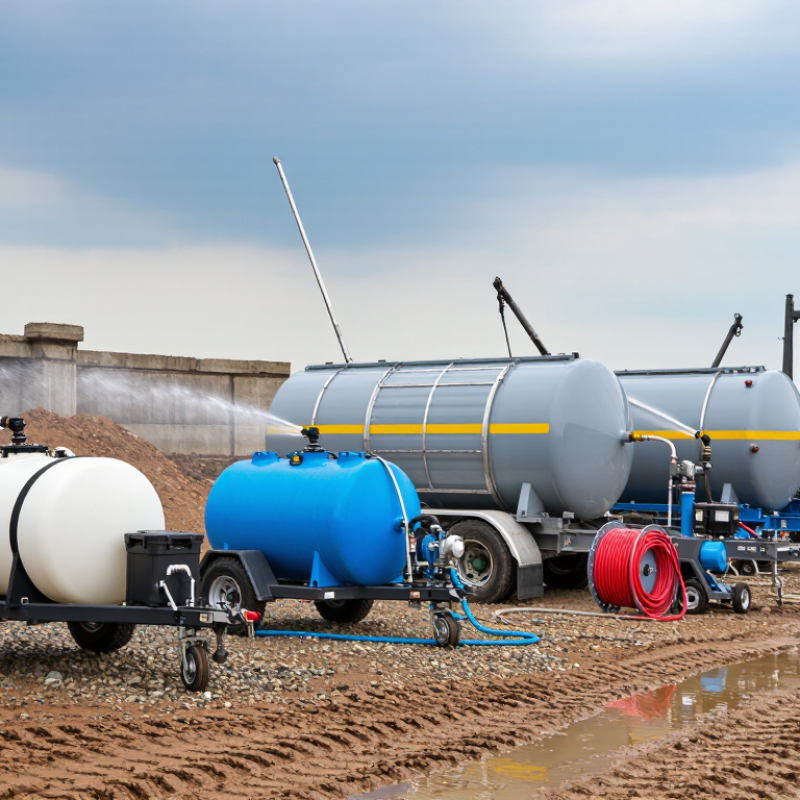
7 Best Battery Powered Dust Suppression Water Tanks?

What Battery-Powered Dust Suppression Water Tanks Are

Battery-powered dust suppression water tanks are mobile systems that store water and deliver controlled spray without a fixed electrical connection.

A typical unit combines a tank, rechargeable battery, pump, filter, hoses, spray nozzles, and a simple control panel. The battery powers the pump, not the water itself.

Operators can tow or place the tank near haul roads, demolition areas, stockpiles, and cutting stations.

Their main purpose is source control.

Fine particles receive water before they become airborne. NIOSH engineering-control guidance identifies water delivery as an effective method for reducing dust during cutting and material handling.

For crystalline silica, OSHA’s construction standard sets an eight-hour permissible exposure limit of 50 micrograms per cubic meter. That limit is a worker-protection requirement, not proof that every spray system performs equally.

Practical design matters.

A 500-liter tank may support several hours of intermittent spraying, but continuous spraying can drain it quickly. A 12-volt, 100-amp-hour battery stores about 1.2 kilowatt-hours before efficiency losses.

Pump pressure, nozzle size, wind, and water quality change real performance. Fine nozzles create better coverage, while clogged filters reduce output.

This is often overlooked. Field checks should record spray distance, refill frequency, battery runtime, and visible dust conditions.

Operators should also avoid excessive water, because muddy surfaces can create slipping, tracking, and drainage problems. Performance claims need site testing, not attractive numbers alone.

How Battery-Powered Dust Suppression Tanks Control Dust

How Battery-Powered Dust Suppression Tanks Control Dust

Battery-powered dust suppression tanks combine stored water, a rechargeable pump, hoses, and spray nozzles. The pump delivers a controlled mist across haul roads, demolition zones, and material piles. Smaller droplets capture airborne particles before wind carries them toward workers or nearby properties. The process is simple. Good placement matters.

EPA AP-42 identifies watering as a practical control for unpaved-road dust, although performance depends on traffic, soil, wind, and surface moisture. OSHA’s Respirable Crystalline Silica Standard sets an airborne exposure limit of 50 micrograms per cubic meter over eight hours.

Water suppression cannot replace monitoring, ventilation, or respiratory protection. It supports them. Tank operators should match nozzle output to road width and refill before dry patches appear.

Battery power removes the need for constant engine operation, reducing local exhaust near active work areas. A typical inspection should check battery charge, pump pressure, filter blockage, nozzle wear, and leaks. NIOSH guidance supports wet methods for reducing dust during many cutting and handling tasks, but real conditions remain unpredictable.

Too much water creates slippery ground and runoff.

Too little water creates false confidence.

That is the difficult part. EPA’s Control of Air Pollution from Construction Activities also emphasizes site-specific planning, since wind and changing work patterns can quickly reduce control efficiency.

Key Features to Compare Before Choosing a Tank

7 Best Battery Powered Dust Suppression Water Tanks?

Choosing a battery powered dust suppression tank requires more than checking its water capacity. OSHA’s respirable crystalline silica standard sets an action level of 25 µg/m³ and a permissible exposure limit of 50 µg/m³ over eight hours. A reliable tank must support consistent control, not occasional spraying. Compare pump flow, working pressure, nozzle coverage, and spray adjustment. NIOSH’s Dust Control Handbook identifies moisture application as a key method for reducing airborne dust. However, excessive water can create muddy surfaces and unsafe footing.

Battery performance deserves close attention. Check the battery voltage, amp-hour rating, charging time, and tested runtime under full pump load. A large tank can be useful, but added weight may reduce maneuverability on uneven ground. Look for a low-water cutoff, washable intake filter, corrosion-resistant fittings, and an emergency manual shutoff. Noise levels also matter near operators. Some specifications appear impressive, yet real performance may change in cold weather or clogged conditions.

Tips: Match tank capacity to daily water access, not ideal estimates. Measure actual flow at the nozzle. Ask for test data, service intervals, and replacement battery costs. A sealed battery compartment helps protect electrical parts, but it can complicate repairs. That trade-off is easy to overlook. For dusty demolition or aggregate work, prioritize stable spray coverage over maximum pressure. Review site measurements regularly, because one tank setting may not suit every material or weather condition.

Seven Leading Battery-Powered Dust Suppression Water Tanks

Seven Leading Battery-Powered Dust Suppression Water Tanks

Battery-powered dust suppression water tanks are becoming practical for roads, demolition zones, quarries, and construction yards. The seven leading configurations include skid-mounted, trailer-mounted, towable, truck-bed, compact site, modular, and remote-controlled tanks. Each supports different access, capacity, and spray-distance needs. Skid tanks suit fixed work areas, while towable units handle changing locations. Compact models fit narrow streets but often carry less water.

The U.S. EPA AP-42 guidance identifies traffic speed, surface silt, vehicle weight, and moisture as major factors in unpaved-road dust emissions. That makes adjustable spray patterns more valuable than simply buying a larger tank. Look for a baffled tank, corrosion-resistant fittings, automatic pressure control, and a battery system rated for a full shift. A useful working range is 500 to 2,000 gallons, depending on nozzle flow and refill access. Smaller tanks may require frequent refilling.

OSHA sets a respirable crystalline silica permissible exposure limit of 50 micrograms per cubic meter, averaged over eight hours. Water suppression can reduce airborne dust, but it does not replace monitoring, ventilation, or respiratory controls. Operators should record battery hours, water consumption, and nozzle performance. I would not trust advertised runtime without testing it under real spray pressure. Cold weather, clogged filters, and repeated starts can reduce performance. That gap deserves more attention. Regular inspection remains essential, even with automated controls.

How to Select, Operate, and Maintain the Right Tank

7 Best Battery Powered Dust Suppression Water Tanks?

How to Select, Operate, and Maintain the Right Tank

Selecting a battery-powered dust suppression tank starts with the worksite, not the tank size. Estimate the dust source, operating hours, and available water supply. A compact tank suits short tasks and narrow access routes. Larger tanks reduce refilling, but they add weight and increase battery demand. Check pump pressure, spray range, nozzle adjustment, and battery runtime under real working conditions. A quoted runtime may drop on slopes, in cold weather, or during continuous spraying. Do not overlook filtration. Fine debris can block nozzles quickly.

Keep it stable.

Before operation, inspect the tank, hoses, fittings, battery casing, and emergency shutoff. Place the unit on firm ground, then aim the spray toward the dust source. Use enough water to control airborne particles without creating muddy runoff. Operators should watch wind direction and nearby drains. A short test spray can reveal uneven coverage. In practice, many failures begin with poor positioning, not weak equipment. The battery should be fully charged, protected from moisture, and disconnected during extended storage.

Maintenance must follow a written schedule.

Rinse the tank with clean water after dusty shifts. Remove and clean filters before pressure drops. Inspect seals for swelling, cracking, or slow leaks. Drain water before freezing conditions. Store the battery in a dry, moderate-temperature area. Keep records of charging cycles and repairs. No tank is perfect. A system that seemed adequate last month may struggle after nozzle wear, route changes, or longer shifts. Review its performance regularly.

FAQS

How does a battery-powered dust suppression tank control airborne dust?

A rechargeable pump moves stored water through hoses and spray nozzles. The nozzles create a fine mist over roads, demolition areas, and material piles. Small droplets capture airborne particles before wind carries them away. Placement matters greatly.

Where can these tanks be used?

They can serve unpaved haul roads, demolition zones, aggregate areas, and outdoor material piles. A nozzle should cover the actual work area, not empty ground beside it. Changing work patterns may require repositioning the tank.

What features should buyers compare?

Compare tank capacity, pump flow, working pressure, nozzle coverage, and spray adjustment. Check the battery voltage, amp-hour rating, charging time, and tested runtime. A low-water cutoff can protect the pump. Useful safeguards.

How should tank capacity be selected?

Match capacity to real daily water access and measured spray demand. Do not rely only on ideal estimates. A larger tank stores more water but may become difficult to move on uneven ground. Weight matters.

How long can the battery operate the pump?

Runtime depends on battery size, pump load, nozzle settings, temperature, and filter condition. Ask for tested runtime under full pump load. Cold weather may reduce performance. The estimate may be imperfect.

What inspections should operators perform?

Check battery charge, pump pressure, intake filter blockage, nozzle wear, fittings, and visible leaks. Measure actual nozzle flow when possible. Replace damaged parts before spraying begins. Small faults spread.

Can too much water create safety problems?

Yes. Excess water can create mud, slippery surfaces, and unwanted runoff. Too little water may leave dry patches and create false confidence. Adjust spray output to traffic, wind, soil, and surface moisture.

Can water suppression replace other dust controls?

No. Wet suppression supports monitoring, ventilation, work planning, and suitable respiratory protection. It cannot guarantee safe air by itself. Wind and changing materials can quickly reduce effectiveness. Conditions remain unpredictable.

What practical details are easy to overlook?

Measure the road width and inspect coverage at worker height. Consider washable filters, corrosion-resistant fittings, manual shutoff controls, and battery replacement costs. A sealed battery compartment protects electrical parts but may complicate repairs. That trade-off deserves attention.

Conclusion

Battery Powered Dust Suppression Water Tanks are portable, efficient systems designed to control airborne dust on construction sites, mining areas, road projects, agricultural land, and other active work zones. Powered by rechargeable batteries, these tanks deliver water through pumps, spray bars, or adjustable nozzles to settle dust particles without relying on fixed electrical connections. Their main benefits include mobility, quieter operation, reduced fuel dependence, and convenient use in locations with limited infrastructure.

This guide reviews seven leading Battery Powered Dust Suppression Water Tanks and explains the features that matter most when comparing them, including tank capacity, battery runtime, charging options, spray coverage, pump performance, durability, transportability, and maintenance requirements. It also outlines how to select the right tank for site conditions, operate it safely and efficiently, extend battery life, clean the water system, and maintain essential components. By understanding these factors, users can choose a practical dust-control solution that supports productivity, environmental responsibility, and reliable long-term performance.


Oliver

Oliver

Oliver is a dedicated marketing professional with a strong understanding of the company’s products, customers, and industry environment. Through years of experience in market research, content strategy, customer communication, and digital marketing, he helps translate complex product features into......