Choosing the right SDS Plus Hammer Drill Bits is a practical decision for contractors, distributors, and serious home renovators. Concrete density, reinforcement, drilling depth, and machine compatibility all affect real performance. A bit that cuts quickly in soft blockwork may struggle against hard aggregate. The difference appears at the worksite.
Percussion drilling specialist Dr. John A. Kevern offers a useful principle: “Tool performance depends on matching the tool to the material and the operating conditions.” This idea guides our 2026 selection. We examine carbide design, flute geometry, tip durability, vibration control, and drilling speed. We also consider how clearly manufacturers state shank dimensions, recommended materials, and safe operating limits.
Small details matter.
A reliable SDS Plus Hammer Drill Bits range should enter the chuck smoothly and remain secure during repeated impact. Its cutting tip should clear dust instead of grinding inside a clogged hole. For global buyers, packaging quality, batch consistency, technical documentation, and supplier responsiveness deserve equal attention. A low purchase price can become expensive when bits wear early or produce oversized holes.
This guide is not pretending that one model suits every site. That would be convenient, but inaccurate. Some premium bits cost more than smaller contractors expect. Some value products perform well, yet provide limited technical information. We compare those trade-offs directly, using practical drilling conditions rather than impressive claims alone. The final recommendations aim to help buyers select confidently, while leaving room for job-specific testing before large-volume orders.
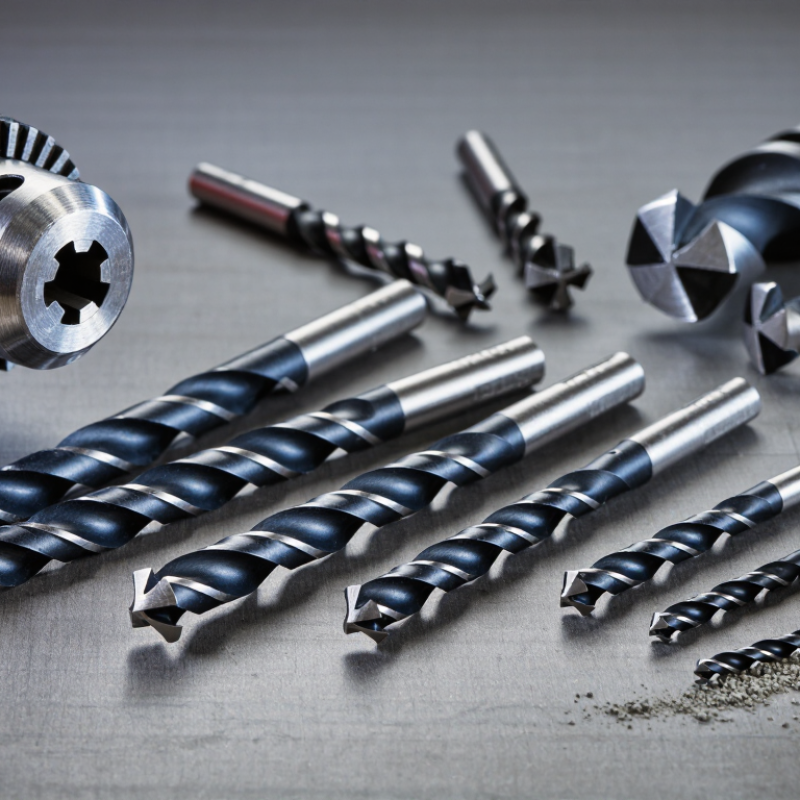
For global buyers, SDS-Plus describes a specific hammer-drill connection system. Its 10 mm shank fits compatible rotary hammers and compact demolition tools. The shank uses two open drive grooves and two closed retaining grooves. Open grooves transfer rotation and impact energy through the holder. Closed grooves engage the retaining balls and control axial movement. The result feels secure, yet the bit changes quickly without a separate chuck. This geometry matters when drilling concrete, brick, or masonry overhead.
DIN 8035 DIN 8035 is commonly referenced for SDS-type drill-bit dimensions and performance expectations. A 2024 Grand View Research report estimated the global power-tools market at about USD 39 billion in 2023. It also projected roughly 5.7% annual growth through 2030. That expansion increases demand for interchangeable, internationally compatible accessories. Buyers should verify shank diameter, flute length, carbide-head design, and stated drilling range. A 10 mm shank alone does not guarantee equal durability.
In field use, I check groove wear before judging cutting performance. A worn open groove can reduce torque transfer and create visible vibration. Dust-packed closed grooves may also prevent proper locking. Small details become expensive during repeated concrete drilling. I once treated a low-cost bit as a direct substitute, and the assumption was too optimistic. Actual service life depends on hammer energy, concrete aggregate, operator pressure, and cooling intervals. Product testing should include several hole diameters, not one impressive sample. That is still an imperfect purchasing method, but it exposes weak retention and uneven carbide wear earlier.
Choosing an SDS Plus hammer drill bit starts with the head, not the package label. The main options are 2-cutter, 4-cutter, and full-carbide designs. Each shape handles concrete differently.
A 2-cutter head uses two opposing carbide edges. It drills quickly in ordinary concrete and masonry. It also removes dust efficiently through the flute. This design suits general anchors and routine installation work. However, hard aggregate can cause vibration and uneven wear. Keep that limitation in mind.
A 4-cutter head adds two supporting edges. The load spreads more evenly across the tip. It usually produces rounder holes in reinforced concrete and dense stone. It also reduces the chance of catching on embedded metal.
Not always faster. A full-carbide head uses carbide across the entire cutting zone. It offers strong impact resistance and stable performance in demanding materials. The trade-off is higher cost and, sometimes, slower dust release in deep holes. Head geometry still matters more than a simple “heavy-duty” claim.
I inspect the tip under bright light before field use. Chipped corners, uneven brazing, or a crooked head deserve rejection. During testing, I compare hole diameter after ten to twenty holes, not after one.
I once assumed the 4-cutter design was always superior. That judgment failed on softer block, where a 2-cutter bit cleared dust faster. Match the head to concrete strength, reinforcement risk, drilling depth, and expected daily volume.
Supplier data should include dimensions, carbide grade, impact guidance, and inspection records.
2026 Top SDS Plus Hammer Drill Bits for Global Buyers
For 2026 purchasing, compare diameter, working length, and impact rate in BPM together. Diameter controls the hole size and affects drilling resistance. Common options range from 5 mm to 32 mm. Smaller bits suit anchors and cable routes. Larger diameters support pipe openings and heavier fixing work.
Working length deserves careful attention. It is the usable drilling depth, not the total bit length. A 250 mm bit may provide only about 190 mm of working length. Measure the wall, tile, or concrete section before ordering. In practical testing, longer bits can wobble more when pressure is uneven. That small movement may create oversized holes. I have found that a shorter bit often feels more stable, although access can become difficult in thick masonry.
Impact rate, measured in BPM, shows how frequently the hammer strikes. Higher BPM may improve progress in softer concrete, but it does not always mean better performance. The drill, bit design, material, and operator pressure must match. Specifications can also vary under load. That point is easy to overlook.
Tips: Match the bit diameter to the anchor manufacturer’s required hole size. Check working length against the real drilling depth. Choose a BPM range supported by the hammer, then test one hole before bulk purchasing. Stop if dust removal slows or the bit overheats.
This chart compares common SDS Plus bit diameters with representative working lengths and impact rates used by compatible rotary hammers. Dimensions are shown in millimeters, while impact rate is shown in blows per minute (BPM). Actual specifications may vary by bit design, drilling application, and hammer model.
For 2026 global buyers, ISO 5468 should be a practical quality checkpoint, not a decorative certificate. The standard covers key requirements for carbide-tipped masonry drills, including dimensional accuracy and suitable construction. Ask suppliers for the exact edition, test scope, and traceable inspection records. A certificate without batch details proves very little.
Field inspection still matters. Check carbide-tip symmetry under bright light. Measure shank runout with a dial gauge. Inspect the brazed joint for gaps, uneven color, or visible cracking. The bit should enter concrete smoothly, without excessive vibration. Small details matter. A poorly centered tip can increase hole size and operator fatigue.
Demand is linked to large masonry activity. The U.S. Geological Survey estimated global cement production at about 4.1 billion metric tons in 2023. The 2023 Global Status Report for Buildings and Construction reported that buildings and construction generated roughly 37% of global energy-related and process emissions in 2022. These figures do not measure drill-bit sales, but they show the scale of concrete work. ISO compliance alone cannot predict every job-site result. My own inspection weakness is relying too heavily on paperwork. Buyers should compare sample drilling results, carbide grade information, tip geometry, and wear after repeated impact cycles. Test the real bit.
| Rank | Nominal Diameter | Overall Length | Working Length | Carbide Tip Configuration | Recommended Masonry Application | SDS Plus Shank Compatibility | Dimensional Quality Check | Impact Resistance | ISO 5468-Oriented Buyer Verification | Procurement Suitability |
|---|---|---|---|---|---|---|---|---|---|---|
| 1 | 10 mm | 160 mm | 100 mm | Single-piece carbide cutting head; centered tip | Concrete, brick, block and general masonry anchor holes | Standard SDS Plus drive grooves; suitable for rotary hammer use | Verify diameter, concentricity, straightness and tip symmetry against approved drawings | High | Request dimensional inspection records, carbide-braze inspection and representative drilling test results | Strong all-purpose size for international hardware and construction supply channels |
| 2 | 8 mm | 160 mm | 100 mm | Carbide-tipped two-edge head; reinforced brazed joint | Light and medium-duty fixing holes in brick and concrete | Standard SDS Plus interface for compact rotary hammers | Check tip runout, flute alignment, shank dimensions and working-length tolerance | High | Confirm carbide grade, braze coverage, surface finish and repeatability across production lots | High-volume size for general fastening and installation work |
| 3 | 12 mm | 210 mm | 150 mm | Two-cutter carbide head; open flutes for debris evacuation | Concrete anchors, pipe clips and utility installation holes | Standard SDS Plus shank; compatible with impact drilling equipment | Check concentricity over the full length and verify straightness after heat treatment | High | Compare test-hole diameter, drilling time, carbide retention and flute wear with the purchase specification | Suitable for deeper holes and professional construction applications |
| 4 | 6 mm | 110 mm | 50 mm | Compact carbide tip; narrow flute profile | Brick, block and light concrete for small wall plugs | Standard SDS Plus shank; intended for light rotary hammer operation | Pay particular attention to tip centering, flute blockage and minimum diameter tolerance | Medium to High | Verify tip retention and hole-size consistency because smaller diameters are more sensitive to runout | Cost-effective option for electrical, HVAC and interior installation work |
| 5 | 14 mm | 260 mm | 200 mm | Reinforced carbide head; high-volume debris channels | Deep fixing holes in concrete and dense masonry | Standard SDS Plus interface; use with a rotary hammer rated for the bit diameter | Inspect shaft straightness, head runout and dimensional stability across the working length | High | Request long-hole drilling data, carbide-braze integrity checks and batch traceability records | Good choice for deep-hole professional and infrastructure-related work |
| 6 | 16 mm | 310 mm | 250 mm | Heavy-duty carbide cutting head; reinforced body transition | Large anchor holes and penetrations in concrete or stone masonry | Standard SDS Plus shank; confirm tool manufacturer diameter limits before use | Check shank wear, body straightness, head balance and flute geometry under load | High | Use production samples for impact-fatigue, drilling-rate and carbide-loss evaluation before approval | Professional-grade size requiring strict machine and safety control |
| 7 | 20 mm | 460 mm | 400 mm | Large carbide head; long-body design with extended flutes | Deep holes in concrete, brickwork and structural masonry | Compatible with SDS Plus tools only when the tool capacity and operating instructions permit | Verify full-length straightness, head concentricity, shank fit and transport protection | Medium to High | Require application-specific drilling trials because long bits are more affected by vibration and deflection | Best for specialist buyers with defined equipment and application requirements |
| 8 | 22 mm | 600 mm | 540 mm | Extended-reach carbide tip; reinforced long-shank construction | Deep masonry penetrations and selected concrete installation tasks | SDS Plus shank compatibility must be confirmed with the hammer specification and duty rating | Inspect straightness, balance, head retention and dimensional consistency at both ends | Medium | Validate against the agreed product drawing and application test; ISO 5468 conformity is not automatic | Application-specific product requiring technical pre-approval |
Buyer note: ISO 5468 provides requirements and test methods for rotary and rotary-impact carbide-tipped masonry drills. Buyers should verify the current edition, applicable product scope, dimensional drawings, carbide specification, braze integrity, shank compatibility and test evidence with the supplier. The dimensions and performance classifications above are representative purchasing specifications, not a declaration that any unbranded item is ISO-certified.
Global buyers need more than a hardness claim when selecting 2026 SDS Plus hammer drill bits. Build a scorecard from field data, not catalog promises. Record holes drilled in reinforced concrete, drilling time, tip wear, and shank damage. A practical test may use 20-millimeter holes in cured concrete. Keep the drill, pressure, and operator technique consistent.
Tips: Calculate cost per hole by dividing total bit cost by usable holes. Add downtime and replacement freight. Weigh each package before shipping. Record carton size, inner protection, barcode quality, and moisture resistance. A bit that lasts 180 holes but arrives damaged is not a strong global purchase. Packaging affects warehouse space and final delivery cost.
Wear life should receive a clear score, but it is not the only measure. Check edge rounding after every 25 holes. Photograph the tip under the same lighting. Compare drilling speed after dust removal. Some results will look inconsistent. That is useful evidence, not a failure. Concrete density, operator pressure, and dust extraction can distort the numbers. I would repeat weak tests rather than hide them. Buyers can then compare performance, cost per hole, packaging efficiency, and data reliability across suppliers.
A 2-cutter head has two opposing carbide edges. It drills quickly in ordinary concrete and masonry. A 4-cutter head spreads force across four edges. A full-carbide head uses carbide across the entire cutting zone.
Choose it for routine anchors, masonry, and ordinary concrete. Its flutes often clear dust quickly. It can also reduce drilling time. Hard aggregate may cause vibration and uneven wear.
Four cutting edges distribute impact more evenly. They often produce rounder holes in dense stone and reinforced concrete. The design may reduce catching on embedded metal. It is not always faster.
Full-carbide construction offers strong impact resistance and stable cutting performance. It suits demanding materials and repeated heavy work. The cost is usually higher. Deep holes may release dust more slowly.
Inspect the tip under bright light. Look for chipped corners, uneven brazing, or a crooked head. Reject it. A damaged tip can create poor holes and unstable drilling.
Test the same hole size in cured concrete. Keep the drill, pressure, and operator technique consistent. Measure results after ten to twenty holes. One hole proves very little.
Divide the total bit cost by the usable hole count. Add downtime and replacement freight. A bit lasting 180 holes may still perform poorly after costly delays. The calculation is imperfect, but useful.
Record carton size, package weight, inner protection, barcode quality, and moisture resistance. Damaged bits create warehouse and delivery problems. Packaging also affects shipping space and final cost.
Ask for dimensions, carbide grade, impact guidance, and inspection records. Request wear data from reinforced concrete testing. Photographs should use consistent lighting. Some results may conflict.
Check concrete density, operator pressure, and dust extraction. Repeat weak tests instead of hiding them. My earlier assumption favored four cutters too strongly. Softer blocks sometimes favored two cutters because dust cleared faster.
For global buyers, selecting the right SDS Plus Hammer Drill Bits requires more than comparing prices. The SDS-Plus system uses a 10 mm shank with two open and two closed drive grooves, providing secure impact transmission and quick bit changes. Bit heads generally fall into three categories: 2-cutter designs for routine masonry work, 4-cutter designs for improved stability and reduced jamming, and full-carbide heads for demanding reinforced concrete applications. Key 2026 specifications include diameter, working length, and impact performance measured in BPM, all of which should match the tool and drilling task.
Quality evaluation should also consider compliance with ISO 5468 carbide-tipped masonry drill requirements, including durability, dimensional consistency, and safe operation. A practical global scorecard compares wear life, cost per hole, drilling efficiency, and packaging data such as quantity, labeling, protection, and transport suitability. This approach helps buyers balance performance, reliability, total operating cost, and international distribution needs.